Best Carp Bait in 2026: A US Angler’s Guide to What Works and When
Quick Answer: The best carp bait for most US anglers is sweet corn, cheap, easy to rig, and irresistible to hungry carp. For bigger fish in pressured water, step up to boilies or tiger nuts. The real secret is matching your bait to conditions like water temperature and clarity, not just grabbing whatever’s on hand.
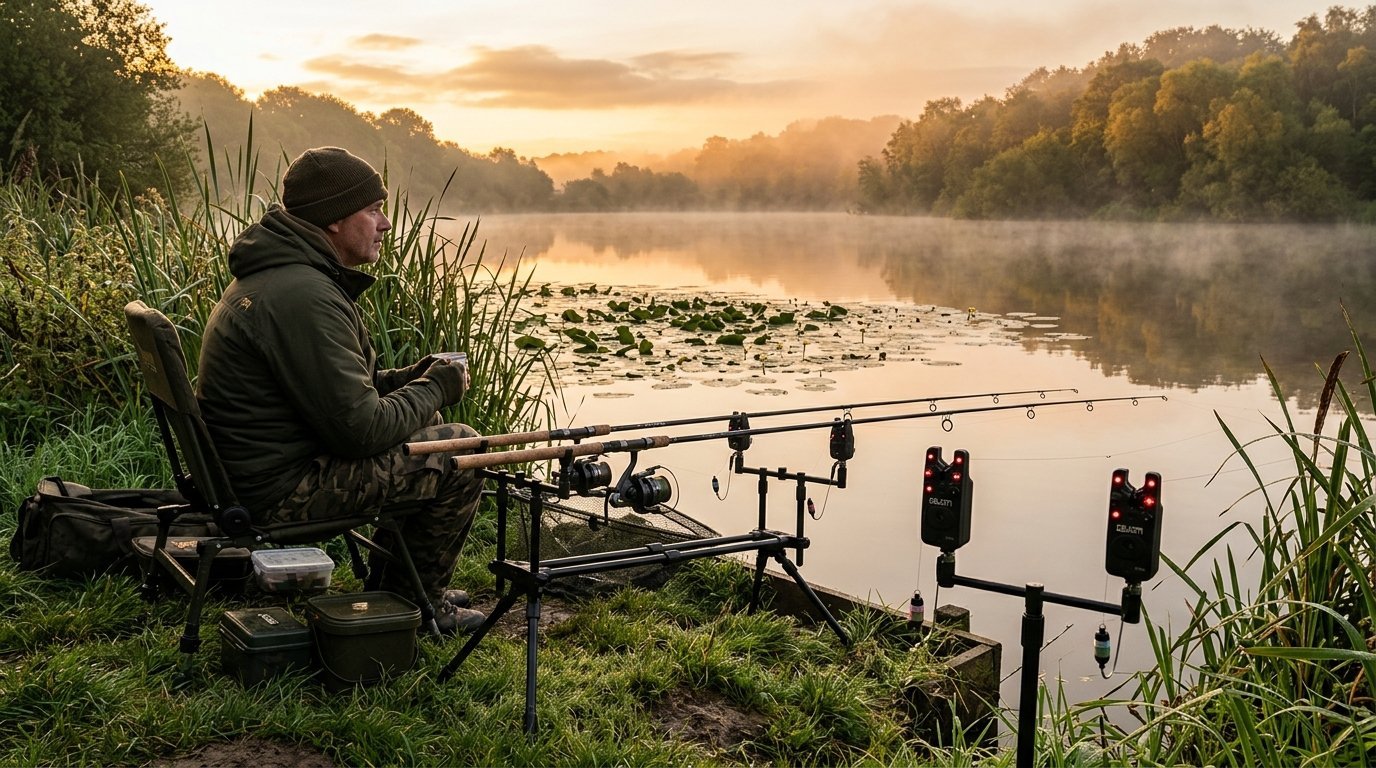
Most carp bait guides read like a shopping list. Corn, boilies, tiger nuts, in that order, every single time. That’s fine if you just want a name to buy. It’s useless when you’re standing on a bank at 48 degrees in stained water and the fish won’t touch what worked last July.
This guide does something different. We’re going to give you a system for picking bait based on what’s actually happening in the water in front of you. Temperature, clarity, fishing pressure, and even which critters are stealing your hookbait all change the answer. Get that matching right and you’ll out-fish the guy next to you throwing the same tub of corn he always throws.
We’ve caught carp on ponds in Texas, big reservoirs in the Midwest, and slow rivers up and down the country. The baits below all work. Knowing when to reach for each one is what separates a slow day from a bent rod.
The 8 Best Carp Baits at a Glance
| Bait | Best For | Cost per Session | Best Season | Bait Thief Risk | Rig Pairing |
|---|---|---|---|---|---|
| Sweet Corn | Beginners | $1-2 | Spring, Summer | High | Hair rig, size 8-10 hook |
| Boilies | Big fish | $10-25 | Fall, Winter | Low | Hair rig, size 4-6 wide-gap |
| Tiger Nuts | Experienced | $5-10 | Summer, Fall | Low | Hair rig, size 6-8 hook |
| Dough / Paste Bait | Beginners | $3-8 | Cold water, Winter | Medium | Hair rig or treble, size 6-8 |
| Nightcrawlers | Beginners | $3-5 | Spring | High | Direct hook, size 6-8 |
| Bread | Beginners | $1-2 | Spring, Summer | Medium | Direct hook or surface, size 8 |
| Chickpeas | Experienced | $1-3 | Summer | Medium | Hair rig, size 8 |
| Dog Biscuits | All levels | $2-4 | Summer | Low | Surface / band rig, size 6-8 |
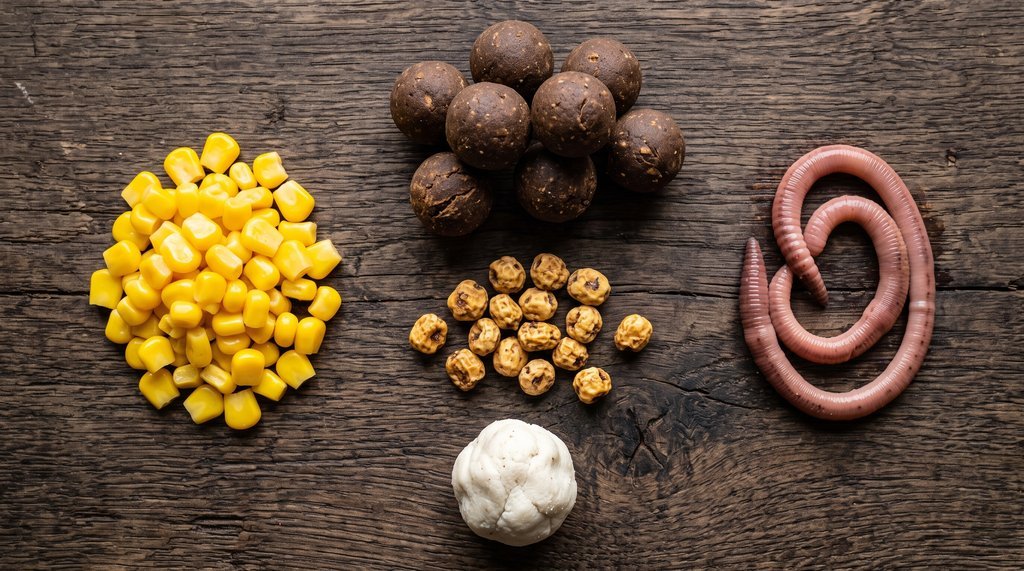
The 8 Best Carp Baits: What They Are and How to Use Each
Sweet Corn, the universal carp bait
If there’s one bait that belongs in every tackle box, it’s sweet corn. A can of Green Giant costs about a dollar and it will out-fish half the specialist baits on the market for most of the season. There’s a reason it’s the first thing everyone throws.
Why does it work so well? Carp are drawn to the bright yellow color, the natural sugars, and the soft texture that mimics a lot of the food they root out of silt and weed beds. Corn also releases a cloud of sweet juice into the water that carp home in on with their scary-good sense of smell. It ticks the visual box and the scent box at the same time, which very few cheap baits do.
Rig it on a hair rig, which is the standard carp presentation and something we cover in our complete carp fishing guide. Thread two to four kernels onto the hair, pin the loop with a bait stop, and pair it with a size 8 or 10 hook. If you don’t want to mess with hairs when you’re starting out, you can hook a couple of kernels directly, though the hair rig hooks far more fish. For a tougher, more visible option that survives casting, try Berkley Gulp! Corn, which won’t wash off the hook and pumps out scent for hours.
Best conditions for corn are warm water from spring through summer, especially in fisheries where the carp aren’t hammered daily. Clear to lightly stained water is ideal because the fish can actually see it.
The most common mistake? Not putting any free corn around your hookbait. Scatter a handful or two so your hooked kernels look like part of a natural feeding patch. A lone bait on a bare hook in an empty swim gets ignored. The one downside of corn is that panfish, catfish, and turtles love it just as much as carp do, so on waters full of bait thieves you’ll be re-casting constantly.
Boilies, the specialist’s edge
Boilies are round paste balls made from a mix of flours, eggs, and flavoring that get boiled to form a hard skin. That skin is the whole point. It keeps small nuisance fish from picking your bait apart while slowly leaking attractant, which means a boilie can sit in the water for hours and still be fishing. For big, wary carp on hard-fished waters, nothing beats them.
These were developed in the UK, where carp fishing is practically a religion, but US anglers are catching on fast. Here’s the nuance most guides skip: flavor should match water temperature. Sweet and fruity flavors like strawberry, banana, and pineapple shine in warmer water above 60 degrees because carp are actively feeding and drawn to sugary, fast-dispersing scents. When the water turns cold or stained, switch to spicy and fishmeal flavors, garlic, halibut, and scopex tend to outperform because they carry differently through cold water and trigger feeding when the fish are sluggish. Brands like CC Moore, Nash, and Dynamite Baits make excellent options across both categories.
Rig boilies on a hair rig with a size 4 to 6 wide-gap hook. A 15mm to 20mm boilie is standard for targeting bigger fish. Use a boilie needle to thread it onto the hair and lock it with a stop. Many anglers pop up a boilie with a small piece of foam or a dedicated pop-up bait so it sits just off the bottom, right in a carp’s line of sight.
Best conditions are pressured waters where carp have grown suspicious of corn, and the colder months when a long-lasting bait matters. The common mistake is fishing a boilie with no free bait around it, or worse, fishing one flavor forever. If you’re not getting bites, change the flavor before you change anything else. In-Fisherman’s In-Fisherman’s breakdown of 10 proven carp baits is a solid read if you want to go deeper on matching baits to specific situations.
Tiger Nuts, tough and proven
Tiger nuts aren’t actually nuts, they’re the tubers of a sedge plant, and carp are obsessed with them. They’re crunchy, oily, and packed with natural sugars and starches that carp find hard to resist once they get a taste. The oils leave a slick on the water that pulls fish in from a distance.
The big advantage of tiger nuts is toughness. Their hard shell means bait thieves like bluegill, catfish, and turtles can’t tear them apart, so your hookbait stays intact on waters where corn gets stripped in minutes. That toughness makes them a top pick for clear water where you need a bait to sit untouched until a proper carp comes along.
You must prepare them correctly. Soak dry tiger nuts for 24 hours, then boil them for 30 to 45 minutes until they soften slightly and split. Never fish them raw or under-prepared, as they can be harmful to carp if not properly cooked. Many anglers let them ferment for a day or two after boiling for an extra scent boost. Rig them on a hair rig with a size 6 to 8 hook, two or three nuts to a hair.
Best conditions are clear, pressured water in summer and fall, and any water crawling with bait thieves. The common mistake beginners make is fishing them without any free tiger nuts as loose feed, or over-baiting. Tiger nuts are so effective that fisheries sometimes limit how many you can use, so check the rules. A handful of free nuts is plenty.
Dough Bait and Paste Bait, the American classic
While the UK went boilie-crazy, American carp anglers stuck with dough bait, and for good reason. Dough and paste baits are soft, moldable mixtures you pack directly around a hook or a small treble. They break down slowly in the water, releasing a steady plume of scent that carp track right to your hook. In cold water, when a hard boilie can be too much for a sluggish fish, soft dough is often the deadliest option going.
Commercial options like Doc’s Carp Getter and Magic Bait are proven producers, but the real fun is making your own. Here’s a simple pack bait recipe: take one large container of old-fashioned oats (about 42 ounces), mix in one can of cream-style corn, and add a capful of vanilla extract or another flavor of your choice. Stir it into a stiff, moldable dough. It costs pennies per session and carp go nuts for it. For more homemade ideas, the Texas Parks and Wildlife homemade carp bait recipes page is a goldmine of tested recipes.
Rig dough by molding a golf-ball-sized lump around a size 6 to 8 hook or a small treble on a hair rig, or use a hair rig with a small dough ball. In cold water, keep the portions small so a slow-feeding carp can get it all in one go. Best conditions are cold water and winter, plus stained or murky water where the scent trail does the work your bait’s color can’t. The common mistake is making the dough too soft, so it flies off on the cast. Add more dry oats or flour until it holds together through a firm cast and a few minutes in the water.
Nightcrawlers, the natural option
Sometimes the oldest bait is the best one. Nightcrawlers are a natural part of a carp’s diet, especially in spring when rain washes worms into the water and carp are hunting for protein after a long winter. The wriggling motion and natural scent trigger a feeding response that manufactured baits can’t always match.
Hook a whole nightcrawler or a couple threaded on a size 6 to 8 hook, leaving a little tail to wriggle. Best conditions are early spring in shallow, warming water. The common mistake is using them on waters loaded with catfish and panfish, which will find a worm long before a carp does. If you’re fishing worms and want to understand the crossover with other species, our best catfish bait guide covers the overlap well.
Bread, cheap and surprisingly effective
A loaf of white bread costs a couple bucks and catches carp all summer. Bread works because it’s soft, breaks up into an enticing cloud, and floats when you want it to for surface fishing. Punch out a disc with a bread punch and thread it on a size 8 hook for bottom fishing, or float a torn chunk on the surface on a warm day and watch carp slurp it down.
Best conditions are warm water in spring and summer, and clear water where surface-feeding carp can spot a floating crust. The common mistake is letting it get too waterlogged and mushy, so it falls off the hook. Fish it fresh and re-bait often. Bread is a fantastic bait for a first outing on new water, as few carp can resist it.
Chickpeas, the underrated option
Chickpeas fly under the radar, but they’re a superb carp bait. They’re firm enough to resist small fish, hold a hair rig well, and carry natural starches carp love. A can from the grocery store costs a dollar or two, or soak and boil the dried ones for pennies. Rig two or three on a hair with a size 8 hook.
Best conditions are summer in clear water where you want a natural-looking bait that bait thieves struggle to destroy. The common mistake is not flavoring them, as a plain chickpea works but a chickpea soaked overnight in a spicy or sweet dip works far better. Think of them as a cheaper, tougher cousin to tiger nuts.
Dog Biscuits, for surface feeding carp
On a hot, still summer day when carp cruise the surface, floating dog biscuits are pure magic. Brands like Pedigree Chum Mixers are the classic choice. They float, they’re packed with scent and oil, and they present naturally as carp learn to feed off the top. Soak them briefly so they soften enough to hook without cracking, then present them on a band rig or hooked directly with a size 6 to 8 hook.
Best conditions are warm, calm days with visible surface activity. The common mistake is spooking the fish by casting right on top of them, so drift a few free biscuits out first, wait for the carp to gain confidence, then slip your hookbait into the feeding zone. Wired2Fish’s Wired2Fish’s complete carp fishing breakdown has more on reading surface feeding behavior.
How to Pick the Right Carp Bait for Conditions
Here’s the part nobody else tells you. A carp’s sense of smell is extraordinary, they have taste buds all over their body and can detect amino acids and sugars in tiny concentrations. But that sense of smell doesn’t work the same way all the time. In warm water, a carp’s metabolism runs hot, it feeds aggressively, and scent disperses fast, so bright, sweet, fast-releasing baits like corn and fruity boilies dominate. In cold water, metabolism crashes, the fish barely move, and heavy oily baits actually work against you because a sluggish carp won’t chase a strong scent trail across the lake. Water clarity changes the game too, as in clear water carp hunt by sight and a subtle natural bait beats a gaudy one, while in murky water scent is everything. Match the bait to what the fish can actually detect and eat that day, and everything gets easier.
| Condition | First Choice | Second Choice | Avoid |
|---|---|---|---|
| Warm water (65F+) | Sweet corn | Boilies (fruity flavor) | Bread (degrades fast) |
| Cold water (under 50F) | Dough bait | Boilies (fishmeal) | Tiger nuts (too tough) |
| Clear water | Tiger nuts | Chickpeas | Corn (too visible, easy for bait thieves) |
| Stained / murky water | Dough bait | Nightcrawlers | Dog biscuits (can’t see surface) |
| High pressure water | Boilies | Tiger nuts | Sweet corn (carp have seen it all) |
| Virgin water / first time on a spot | Sweet corn | Bread | (anything unfamiliar works) |
| Bait thieves present (catfish, turtles) | Tiger nuts | Dog biscuits (surface) | Nightcrawlers, corn |
By Water Temperature
Temperature is the single biggest lever on carp behavior. Below 50 degrees, a carp’s metabolism slows to a crawl. It needs far less food, moves less, and digests slowly, so small portions of an easy-to-eat bait like soft dough win. Force-feeding a cold carp a stomach-full of tiger nuts is pointless, it simply won’t eat that much.
Peak feeding happens between 65 and 75 degrees. This is when carp are most active, roaming widely and eating everything, and it’s when almost any bait produces. Above about 80 degrees, feeding can slow again in the heat of the day, which is when surface baits like dog biscuits and bread come into their own during evening cool-downs. Carry a cheap thermometer and let the water tell you what to tie on.
By Fishing Pressure
On a heavily fished water, carp learn. They get caught on corn once, twice, ten times, and they start associating that bright yellow kernel with getting hooked and hauled onto the bank. This is why boilies and tiger nuts outperform corn on pressured fisheries, as the fish simply haven’t been conditioned to fear them the same way. A boilie in an unusual flavor, or a hookbait fished away from where everyone else piles in their bait, can be the difference between a blank and a personal best. On virgin or lightly fished water, none of this applies and cheap corn is king.
By Season
Spring means carp are recovering from winter and hunting protein in the shallows, so corn and nightcrawlers in warming margins are deadly. Summer is the everything-works season, so let water clarity guide you, natural baits in clear water and scent-heavy baits in murk. Fall triggers heavy feeding as carp pack on weight before winter, and this is when boilies and tiger nuts really shine because the fish are hunting calorie-dense food. Winter calls for small portions of soft dough bait fished patiently, as the fish are there but they’re barely eating.
Best Carp Bait by Budget
| Tier | Budget | Best Baits | Session Cost | Best For |
|---|---|---|---|---|
| Budget | Under $5 | Sweet corn, bread, homemade dough bait, nightcrawlers | $1-3 | Beginners, casual anglers |
| Mid-range | $5-$15 | Commercial dough baits (Doc’s, Magic Bait), basic boilies, tiger nuts (DIY boiled) | $5-10 | Anglers targeting specific waters |
| Premium | $15+ | Specialist boilies (CC Moore, Nash, Dynamite), ready-tied tiger nut kits | $15-30 | Targeting big fish on pressured waters |
Budget tier. You do not need to spend money to catch carp. A can of corn, a loaf of bread, and a batch of homemade oat-and-corn dough will out-fish plenty of expensive setups. This is where every beginner should start. Learn to read the water and rig your bait well before you spend a dime on specialist products, because technique matters more than the price tag on your bait.
Mid-range tier. Once you’re catching consistently and want to target a specific water, this is where you invest. Commercial dough baits save prep time and are proven producers, basic boilies give you a longer-lasting hookbait, and boiling your own tiger nuts keeps the cost down while unlocking a top-tier bait. Most serious hobby anglers live comfortably in this tier all season.
Premium tier. If you’re chasing a specific big fish on a hard-fished water, premium baits earn their keep. Specialist boilies from CC Moore, Nash, and Dynamite Baits use high-grade ingredients and refined flavor profiles that can tempt fish that have seen everything. Ready-tied tiger nut kits save time. This tier is about marginal gains on tough waters, not everyday fishing.
Common Carp vs Grass Carp: Does It Matter?
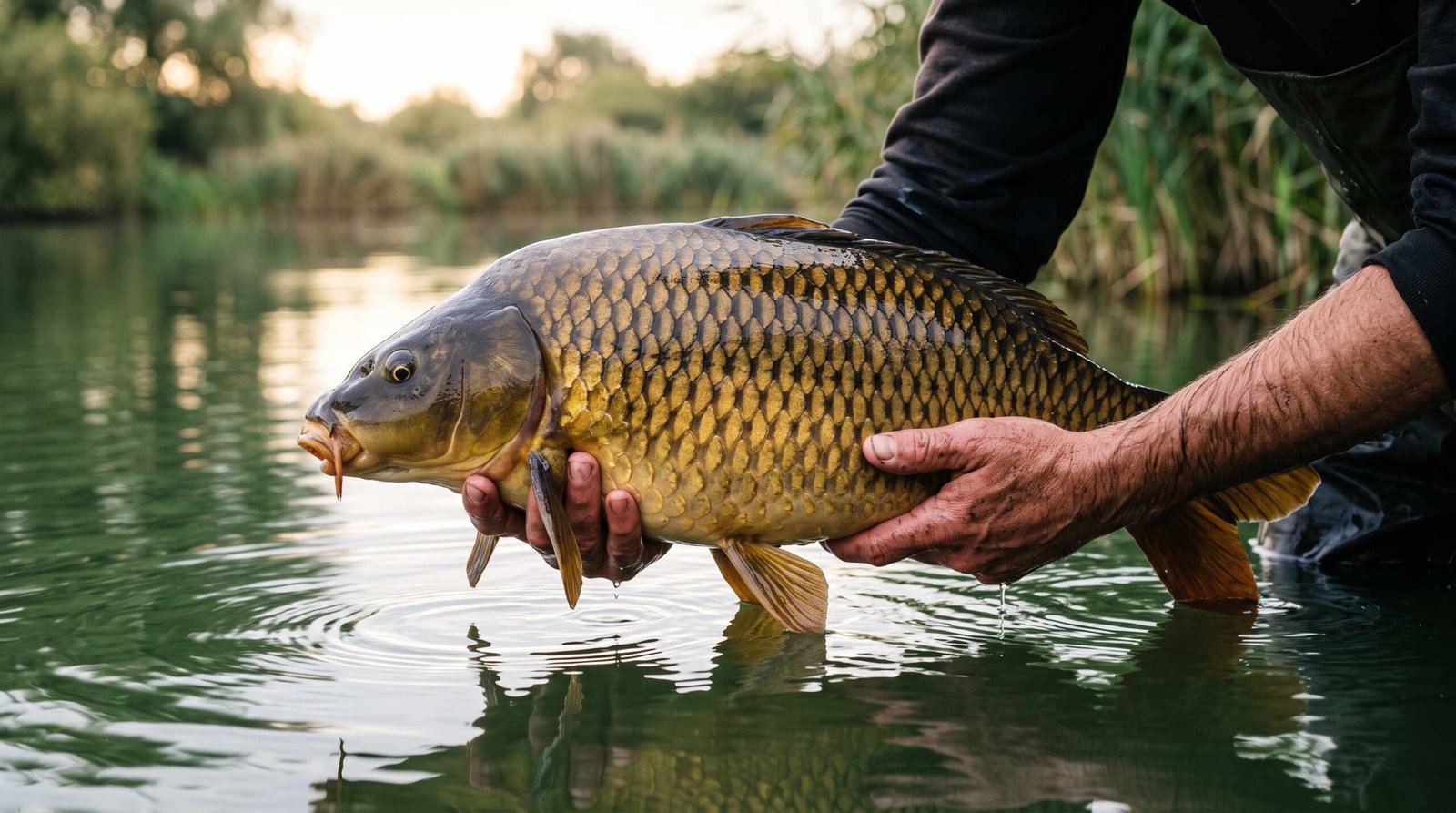
Yes, it matters, and it’s worth knowing which species swims in your water before you load up on bait. Common carp are the classic golden-bronze fish most of this guide is built around, and they respond to all eight baits above. They’re omnivores that root around the bottom eating insects, crustaceans, seeds, and plant matter, so a corn kernel or a boilie is right in their wheelhouse.
Grass carp, also called white amur, are a different animal. They were introduced across many US waters specifically to control aquatic vegetation, and they’re largely herbivorous. A grass carp would rather graze on soft weed, leafy greens, and vegetation than hunt down a protein-packed boilie. That changes your bait selection completely.
If you’re specifically targeting grass carp, the best baits are things that mimic their natural plant diet. Cherry tomatoes are a legendary grass carp bait, along with sweet corn, bread, and even hooked bits of leafy vegetation like lettuce or watermelon rind. Tiger nuts and boilies, so effective for common carp, are far less reliable for grass carp because they’re just not what these fish are wired to eat.
The good news for mixed fisheries is overlap. If your lake holds both species, sweet corn and bread will catch common carp and grass carp alike, which is one more reason corn is such a smart default. Bait with corn and you’ve covered both bases without carrying a tackle box full of specialist stuff. If your local water also holds bass or panfish you want to target on other trips, our bass fishing guide and how to catch bluegill guide break down bait and tactics for those species too.
Pre-Baiting: The Single Biggest Edge in Carp Fishing
If you want to catch more carp than anyone else on the water, pre-baiting is your secret weapon. Pre-baiting means chumming your chosen spot with free bait one to three days before you actually fish it. Do it right and you condition the carp to visit that spot and feed with total confidence, so when you finally drop a hookbait in, they eat it without a second thought.
Here’s how to do it. Pick a spot you can fish, then introduce a moderate amount of bait each day leading up to your session. The best pre-baiting baits are cheap and break down naturally, so sweet corn, crushed tiger nuts, and a simple oats mix are ideal. Crushing or partially breaking your bait releases more scent and gives the carp a taste without filling them up, which keeps them coming back for more.
Follow the little-and-often rule once you’re fishing. Introduce maybe 5 to 10 spods of bait to start your session, then top up with 2 to 4 more after each fish you catch. This keeps a steady trickle of food going in without ever overfeeding the swim, which is the fastest way to kill a spot. A carp that’s stuffed won’t chase your hookbait. For the full tactical picture on rigs, spots, and playing fish, dig into our complete carp fishing guide.
Frequently Asked Questions
What is the best bait for carp fishing?
Sweet corn is the best all-around carp bait for the majority of situations, especially if you’re just starting out. It’s cheap, carp love the bright color and sweet scent, and it rigs easily on a hair rig with a size 8 to 10 hook. That said, the honest answer is that the best bait depends on conditions. In warm water on lightly fished lakes, corn is hard to beat. On pressured waters where carp have learned to avoid corn, boilies and tiger nuts pull ahead. In cold water, soft dough bait fished in small portions outperforms everything. The smartest anglers don’t have one favorite bait, they carry a few options and match the bait to the water temperature, clarity, and fishing pressure on the day. If you only buy one thing, make it a can of corn, but understand that knowing when to switch is what turns a good angler into a great one.
Is sweet corn good bait for carp?
Sweet corn is excellent carp bait and arguably the most reliable option for anglers of any skill level. Carp are drawn to it because it hits three triggers at once, the bright yellow color grabs their attention visually, the natural sugars release a sweet scent cloud they can detect from a distance, and the soft texture matches a lot of the natural food they eat off the bottom. It’s also incredibly cheap, as a single can costs about a dollar and provides plenty of hookbait plus loose feed for a session. Rig two to four kernels on a hair rig for best results, and always scatter some free corn around your hookbait so it looks like a natural feeding patch. The one real drawback is that panfish, catfish, and turtles love corn just as much as carp do, so on waters full of bait thieves you’ll be re-casting often. On pressured fisheries where carp have been caught on corn repeatedly, they can grow wary of it, which is when you’d switch to boilies or tiger nuts.
What is the best carp bait for beginners?
Sweet corn is the best carp bait for beginners, no contest. It’s cheap, widely available at any grocery store, easy to rig, and it catches fish consistently across most conditions. You don’t need to prepare it, flavor it, or learn any special technique to make it work. Bread is a close second for the same reasons, as it’s inexpensive, effective, and forgiving. Both baits let a new angler focus on the more important fundamentals like finding fish, casting accurately, and learning to use a hair rig, rather than fussing over complicated bait prep. As you gain confidence, you can experiment with homemade dough bait, which is nearly free to make and deadly in cold water. Save the specialist boilies and tiger nuts for later, once you understand how carp behave and can read a water. The truth is that a beginner with a can of corn and good watercraft will out-fish an inexperienced angler with a bag full of premium bait every time. Master the cheap stuff first.
What is the best homemade carp bait?
The best homemade carp bait is a simple pack-style dough bait made from oats and cream-style corn. Take one large container of old-fashioned oats, around 42 ounces, mix in one can of cream-style corn, and add a capful of vanilla extract or another flavor you like. Stir it into a stiff, moldable dough that holds together on the cast and breaks down slowly in the water, releasing a steady scent trail carp track right to your hook. It costs only a few dollars and makes enough for several sessions. This dough is especially deadly in cold and stained water where scent matters more than appearance. You can tweak the recipe endlessly, adding strawberry gelatin, garlic powder, or fishmeal depending on the season and conditions. The Texas Parks and Wildlife website has a great collection of tested homemade recipes if you want to experiment further. Homemade dough is proof that you don’t need expensive commercial baits to catch plenty of carp, and many seasoned American anglers swear by their own secret mixes.
Do boilies work in rivers?
Yes, boilies work very well in rivers, and their design actually makes them ideal for flowing water. A boilie’s hard, boiled skin resists the small nuisance fish and crayfish that are often abundant in rivers, so your hookbait stays intact far longer than soft baits would. That durability also means a boilie holds up to the tumbling and abrasion of a current. For river fishing, use a heavier lead to hold bottom and consider a slightly larger boilie, around 18mm to 20mm, so it stands out and stays put. Flavor choice matters here too, as in colder or stained river water, spicy and fishmeal flavors like halibut and garlic tend to outperform sweet fruity ones. Pre-baiting a river swim with a few free boilies over several days can be extremely effective because river carp often patrol set routes and will learn to stop at a reliable food source. Pair your boilie with a size 4 to 6 wide-gap hook on a hair rig and you’ve got a presentation that shrugs off river nuisance fish while pulling in the bigger carp.
What scent or flavor attracts carp the most?
Carp are drawn to a range of scents, but the winners change with water temperature. In warm water above 60 degrees, sweet and fruity flavors dominate, so strawberry, pineapple, banana, and plain sweetcorn scent trigger aggressive feeding when carp are active and metabolisms are running hot. These lighter scents disperse quickly and pull fish in fast. In cold or stained water below 50 degrees, switch to savory and spicy profiles, as garlic, halibut, fishmeal, and scopex tend to outperform because they carry differently in cold conditions and appeal to sluggish, slow-feeding fish. Carp also have an intense response to natural amino acids and the sugars found in corn and tiger nuts, which is part of why those baits are so consistently effective. If you’re flavoring your own baits, don’t overdo it, as too strong a scent can actually repel wary fish on pressured waters. A subtle, well-matched flavor beats an overpowering one. The real lesson is that no single scent wins year-round, so match the flavor to the water temperature and you’ll get far more bites.
Can you catch carp with worms?
Absolutely, you can catch carp with worms, and nightcrawlers are one of the most natural and effective baits available, especially in spring. Worms are a genuine part of a carp’s diet, as heavy rain washes them into lakes and rivers, and carp actively hunt them for protein after a long winter. The wriggling motion and natural scent trigger a feeding response that manufactured baits sometimes can’t match. Hook a whole nightcrawler or thread a couple onto a size 6 to 8 hook, leaving a little tail free to wriggle and attract attention. The best time to fish worms is early spring in shallow, warming water where carp are actively feeding up. The main downside is that worms are a magnet for every other fish in the water, so on lakes loaded with catfish, bluegill, and other panfish, a worm often gets grabbed by an unwanted fish long before a carp finds it. If bait thieves are a problem, you’re better off with a tougher bait like tiger nuts. But in the right conditions, a simple nightcrawler is a deadly and underused carp bait.
How long should you pre-bait before fishing?
The sweet spot for pre-baiting is one to three days before you fish, though even a single day of pre-baiting can make a noticeable difference. The goal is to condition carp to visit your chosen spot and feed there with confidence, so by the time you drop a hookbait in, they’re already used to finding food in that exact location and eat without hesitation. For the best results, introduce a moderate amount of cheap, natural bait like corn, crushed tiger nuts, or an oats mix each day leading up to your session. Consistency matters more than volume, as feeding the same spot a little each day teaches the fish to check it regularly. Don’t overfeed, because a swim stuffed with free bait will leave the carp full and uninterested in your hook. Once you’re actually fishing, follow the little-and-often rule, starting with 5 to 10 spods of bait and topping up with 2 to 4 more after each fish. On waters you fish regularly, ongoing pre-baiting over weeks can turn a spot into a genuine hotspot that produces session after session.