

How to Catch Carp: The Complete Guide to Bait, Rigs, and Tactics
August 1, 2026 | by Ian
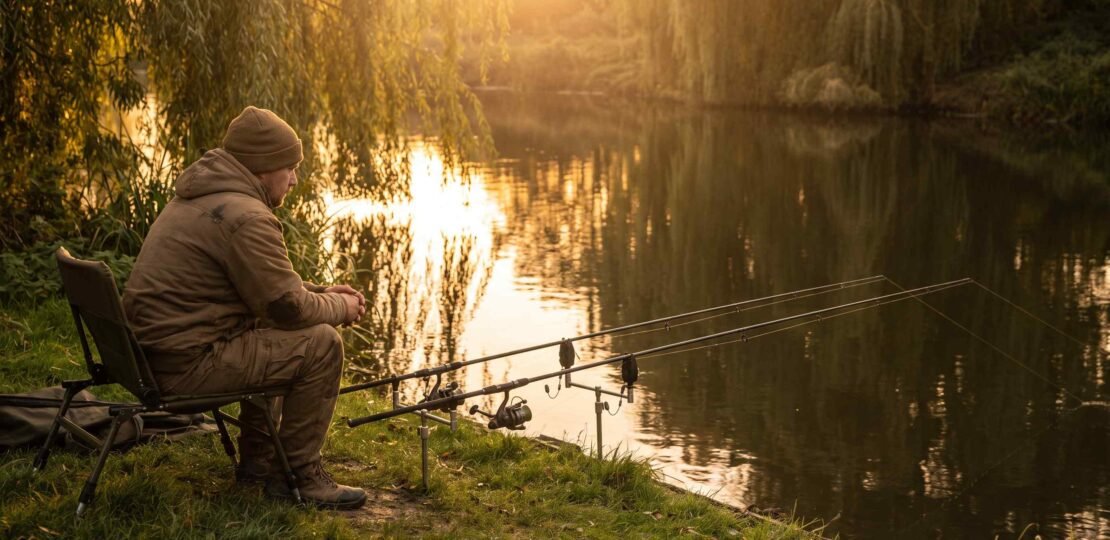
How to Catch Carp: The Complete Guide to Bait, Rigs, and Tactics
To catch carp, fish bait like sweet corn or boilies on a hair rig, where the bait hangs on a short loop below the hook instead of on it. Target flats near weed beds, creek mouths, and structure with soft bottoms. Fish at dawn, dusk, and through the night, with summer being the peak season for active, hungry fish.
Ask most American anglers about carp and you will get a shrug, maybe a comment about “trash fish.” That reaction is one of the great missed opportunities in freshwater fishing. Carp are big, powerful, wary, and available almost everywhere. A double-digit fish will bury your rod tip and peel line off the reel in a way few bass ever will. Once you hook a good one, the label “trash fish” disappears fast.
There is a reason fly anglers have started calling carp the “freshwater bonefish.” They cruise shallow flats, they tail in inches of water, they spook at a bad cast, and they reward a careful, well-planned approach. Sight-fishing a big carp in clear water is every bit as technical as chasing bonefish on a saltwater flat, and you can do it a short drive from your house. Common carp live in nearly every US state, in rivers, reservoirs, farm ponds, and city park lakes. The US Fish and Wildlife Service species profile underscores just how widespread they are across the country.
This guide is built around one central idea. Most US carp anglers toss a few kernels of corn on a plain hook, sit back, and wonder why the European guys keep landing thirty-pound fish. The answer is a small piece of tackle called the hair rig, and it is the single biggest upgrade you can make. We will cover behavior, location, bait, and gear, but everything points back to that one change. Get the rig right and your catch rate climbs immediately.
Understanding Carp Behavior
Carp are omnivorous bottom-feeders with a genuinely impressive sensory system. Their sense of smell and taste is among the sharpest in freshwater, which is why scent and flavor matter so much in bait selection. They root through silt and sediment, sifting for insect larvae, crustaceans, seeds, and vegetation. Understanding that they feed with their noses and mouths more than their eyes changes how you approach them.
Here is the thing most anglers get wrong. Carp are not stupid. They may look like slow, lumbering pond fish, but in heavily pressured waters they learn fast and become genuinely difficult to fool. A carp that has been hooked once and released will treat unfamiliar objects with suspicion for a long time. City park fish that see bait every weekend can be maddeningly cautious. This intelligence is exactly why technique matters more than brute force.
The most important behavior to understand is how carp feed. They are slow, deliberate feeders, and when they encounter something unfamiliar they “mouth and eject” it. That means they suck the item in, taste and feel it, and if something is off they blow it straight back out. On a plain hook with bait wrapped around the bend, the carp feels hard metal, gets suspicious, and ejects the whole thing before you ever register a bite. This single behavior is the entire reason the hair rig exists, and we will come back to it in detail.
Seasonal movement follows a predictable pattern once you know it. In spring, carp push into warmer shallows to feed heavily and prepare to spawn. Through summer they hold on warm flats and weed beds, feeding hard in low light and often through the night. Fall triggers a heavy feeding response as fish pack on weight before the cold, making it one of the best times of year to catch a big one. In winter they drop into deeper water and slow right down, feeding in short, sluggish windows. According to the USGS species profile, common carp are established in every state except Alaska, so wherever you fish across the lower 48, these seasonal patterns apply.
How to Find Carp (Reading the Water)
Finding carp is a skill most guides skip entirely, and it is the difference between fishing blind and fishing with confidence. Carp constantly give away their location if you know what to look for. Before you even bait a hook, spend ten minutes watching the water. Here are the signs that matter.
- Mudding: Clouds of colored silt rising in the water where carp are rooting through the bottom. If you see an area of stained, cloudy water on an otherwise clear day, fish are digging there right now.
- Bubbling: Streams of small bubbles breaking the surface as feeding carp disturb the bottom and release trapped gas from the sediment. A patch of fizzing bubbles that moves slowly across the surface is a feeding fish, not a random gas release.
- Tailing: The tail fin breaking the surface as a carp feeds head-down in shallow water, exactly like a bonefish on a saltwater flat. This is one of the most exciting sights in freshwater fishing and a dead giveaway of an actively feeding fish.
- Rolling: A dorsal fin or a full-bodied roll at the surface, most common at dawn and dusk. Rolling fish are often on the move, and repeated rolls in one area mark a spot worth fishing.
- Patrol routes: In still water, carp follow consistent travel routes day after day, often along drop-offs, weed edges, or the margins of an island. Watch for fish passing the same line repeatedly and set up on that route.
Once you know the signs, focus on the right habitat. Carp love flats near creek mouths where food washes in, slow-moving stretches of rivers, thick weed beds that hold insects and cover, the edges of lily pads, and quiet coves with soft, silty bottoms they can root through. Hard, rocky bottoms hold fewer fish. Look for the soft, food-rich zones and you will find carp far more often than if you cast to open water at random.
Carp Bait: What Actually Works
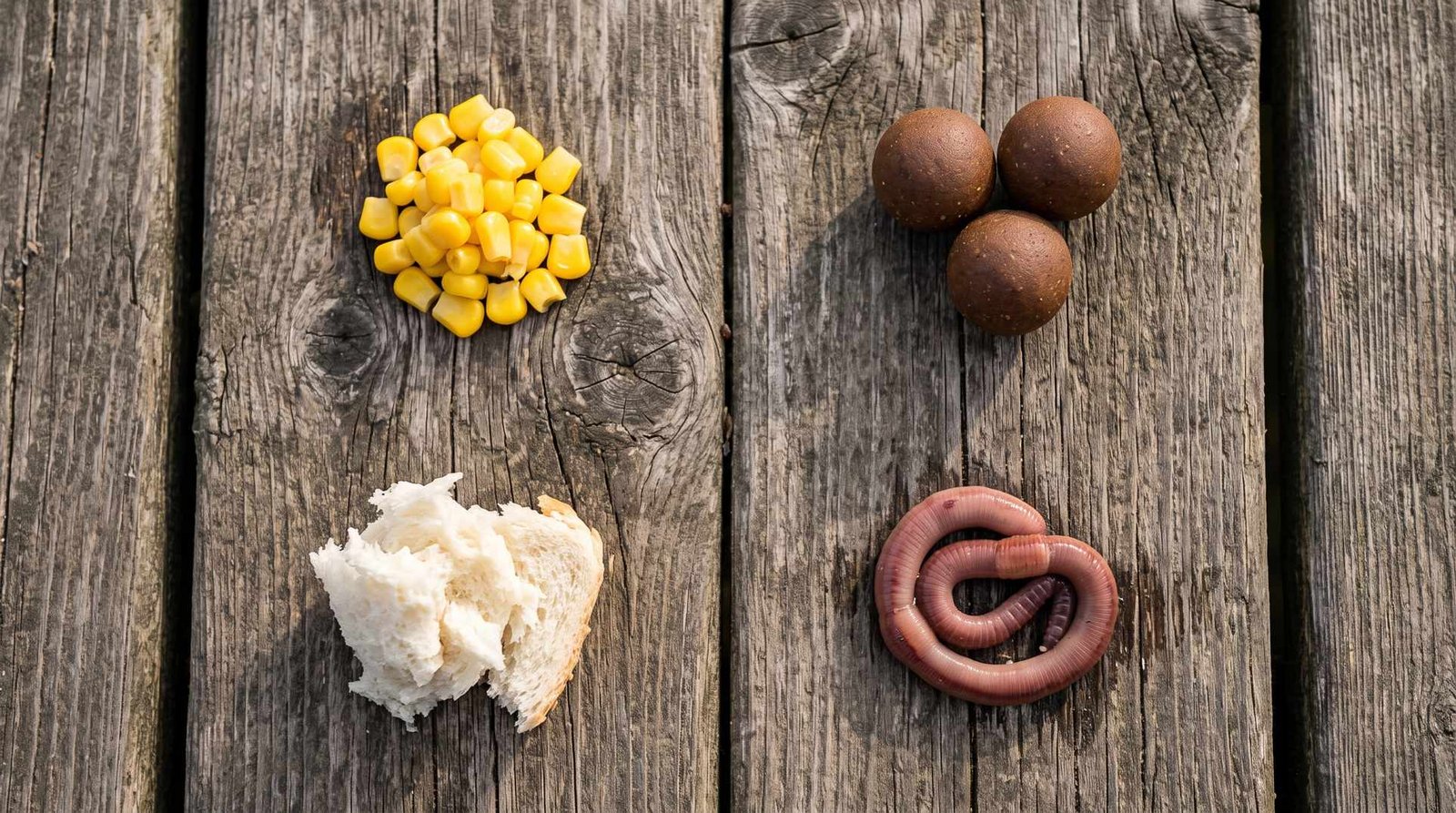
Bait for carp splits cleanly into two tiers. There is the accessible, cheap stuff that catches fish and gets you started, and there is the upgrade bait that separates the occasional catch from consistent results. Both have a place. Start with the beginner options, then graduate as you get serious.
Beginner Baits
- Corn: The undisputed classic carp bait. Bright, sweet, and cheap, canned sweet corn catches carp everywhere. The catch is that every panfish, bluegill, and catfish in the lake will try to steal it too. If you fish corn, thread two or three kernels onto a hair rig rather than burying a hook inside a single kernel. On a plain hook the carp feels the metal and ejects it. On a hair, the bait sits free and the hookup happens naturally. We expand on exactly why in the next section. Corn also overlaps heavily with catfish bait, and our best catfish bait guide is worth a read if you fish waters that hold both species.
- Bread: Cheap and surprisingly effective, especially in shallow water. Pinch a piece onto the hook or free-line a chunk with no weight and let it drift naturally to cruising fish. The downside is that bread goes soft and falls off the hook quickly, so it suits short, active sessions more than long soaks.
- Worms: Nightcrawlers and red worms are reliable, available at any bait shop or dug from your own yard, and carp eat them readily. The trade-off is the same as corn, since worms attract every other fish in the water too.
Upgrade Baits
- Boilies: Flavored dough balls boiled to harden the outer shell. That tough exterior is the whole point, because small bait thieves cannot easily break them down, so your bait stays on the hook waiting for a proper carp. Boilies are the go-to for targeting big fish. Use sweet flavors like strawberry and pineapple in warm water, and switch to savory or spicy flavors such as fishmeal and chili in cold or stained water.
- Tiger nuts: Harder than boilies and loaded with natural sugars and oils, tiger nuts are a proven big-fish attractor that small fish struggle to steal. They must be soaked overnight, and ideally boiled, before use to soften them enough to be safe and to release their attractant properties. Never fish them dry and unprepared.
- Method feeder dough: Groundbait packed tightly around a method feeder frame with a short hair-rigged hookbait sitting on top. As the dough breaks down it releases a cloud of scent and small food particles that pull fish right onto your hookbait. It is one of the most effective ways to concentrate feeding carp around your hook.
The table below compares the main carp baits so you can match the right choice to your water and your goals.
| Bait | Best situation | Ease of use | Bait robustness | Big fish potential | Cost |
|---|---|---|---|---|---|
| Corn | Warm water, active fish, all-around starter | Very easy | Low (thieves steal it) | Moderate | Very low |
| Bread | Shallow, clear water, surface or free-line | Very easy | Very low (softens fast) | Low to moderate | Very low |
| Worms | Cold water, pressured fish, anywhere | Very easy | Low | Moderate | Low |
| Boilies | Targeting big fish, long soaks | Moderate | High | Very high | Moderate |
| Tiger nuts | Heavily pressured waters, big fish | Moderate (soak overnight) | Very high | Very high | Low to moderate |
| Method feeder dough | Drawing fish to your spot, still water | Moderate | High (frame holds bait) | High | Moderate |
The Hair Rig: The Single Biggest Upgrade
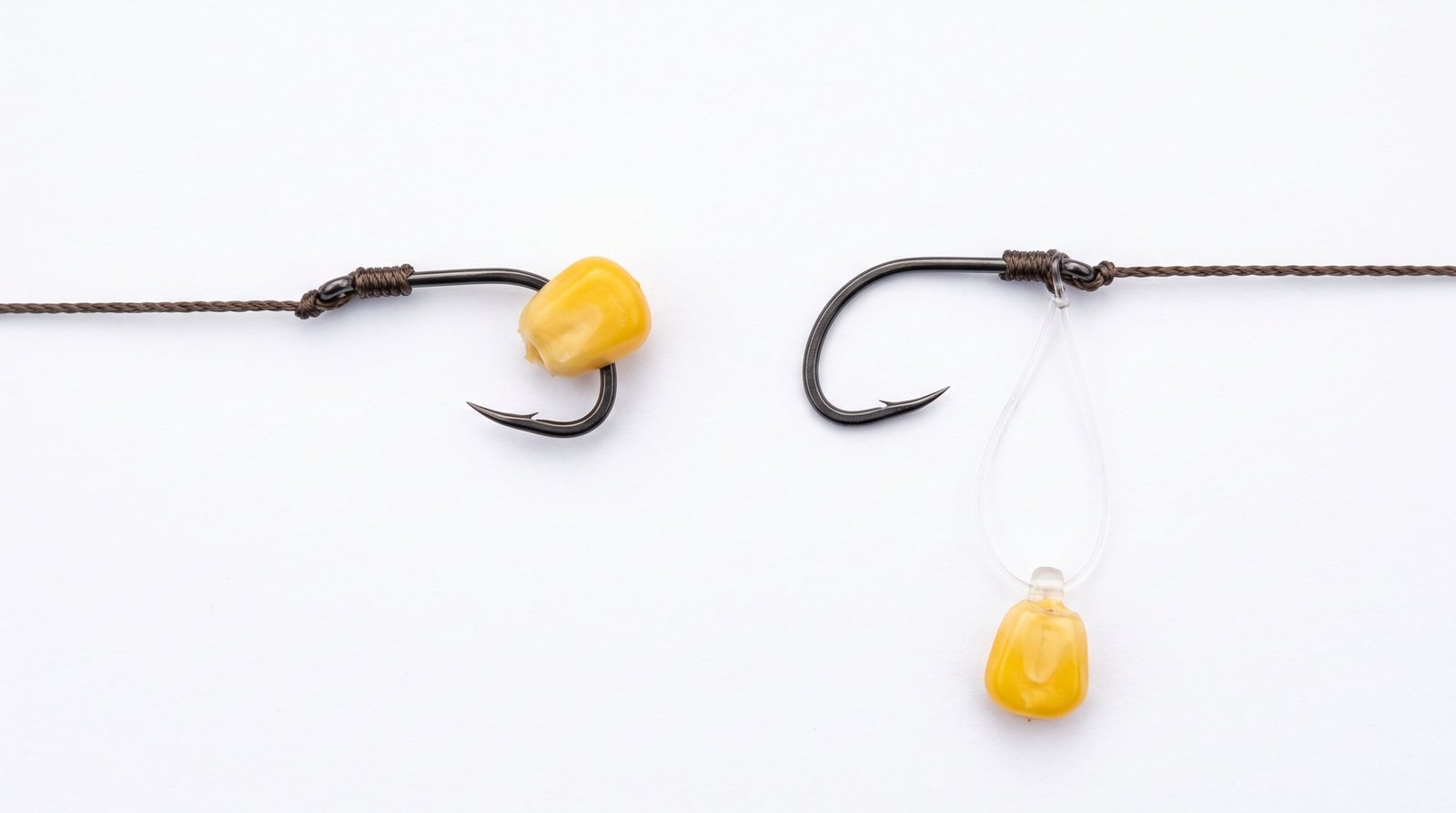
This is the section that matters most. If you take nothing else from this guide, take the hair rig. It is the reason European carp anglers consistently land bigger fish than their American counterparts, and it is embarrassingly simple once you understand it.
Remember how carp feed. They suck a food item into their mouth, taste and feel it, and if anything seems off they eject it just as fast. On a traditional setup, the hook is buried inside or wrapped by the bait. The carp takes the bait, immediately feels the hard, sharp metal against the inside of its mouth, and spits the whole package out before you can react. You sit there watching a motionless rod tip while a fish quietly steals your corn. This happens constantly, and most anglers never realize it.
The hair rig solves the problem with elegant logic. Instead of putting the bait on the hook, you attach it to a short loop of line, called the hair, that hangs about one and a half to two inches below the bend of the hook. The hook itself is bare and exposed. When a carp sucks in the bait, it also draws the bare hook into its mouth. When it tries to eject the bait, the free-swinging hook turns over and catches firmly in the lower corner of the lip, exactly where you want a clean, safe hook hold. Because the fish never feels a hard object inside the bait, it takes with confidence. Hookup rates go up dramatically, and the hold is more secure. This is the whole game.
Here is how to tie a basic hair rig step by step.
- Cut eight to ten inches of braid or strong monofilament to use as your hooklink.
- Tie a small loop at one end to form the hair. The loop itself should hang about one and a half to two inches long once finished, which is where the bait will sit.
- Thread your bait onto the hair using a baiting needle, then lock it in place with a corn stop, a small piece of toothpick, or a purpose-made boilie stop pushed through the loop so the bait cannot slide off.
- Pass the free end of the hooklink through the back of the hook eye, coming through from behind the point.
- Tie a knotless knot by whipping the line five or six wraps down the shank of the hook, then threading the tag end back through the eye. This is what sets the hair at the correct angle below the hook.
- Adjust so the hair extends just below the bend of the hook, with the bait hanging freely a short distance from the point. The hook should sit bare and exposed above the bait.
- Attach the finished hooklink to your lead system, either a lead clip or an inline lead in the one to two ounce range, and you are ready to cast.
If tying rigs at the bank sounds fiddly, do not worry. You can buy high-quality pre-tied hair rigs at nearly any tackle shop or online, ready to clip on and fish. Many anglers keep a pack of pre-tied rigs on hand and only tie their own once they are comfortable with the knotless knot. Either way, once you switch from a plain hook to a hair rig, you will feel the difference on your very next session.
Carp Rigs Beyond the Hair Rig
The hair rig is the foundation, but a few other setups are worth knowing as your fishing develops. Each solves a specific problem.
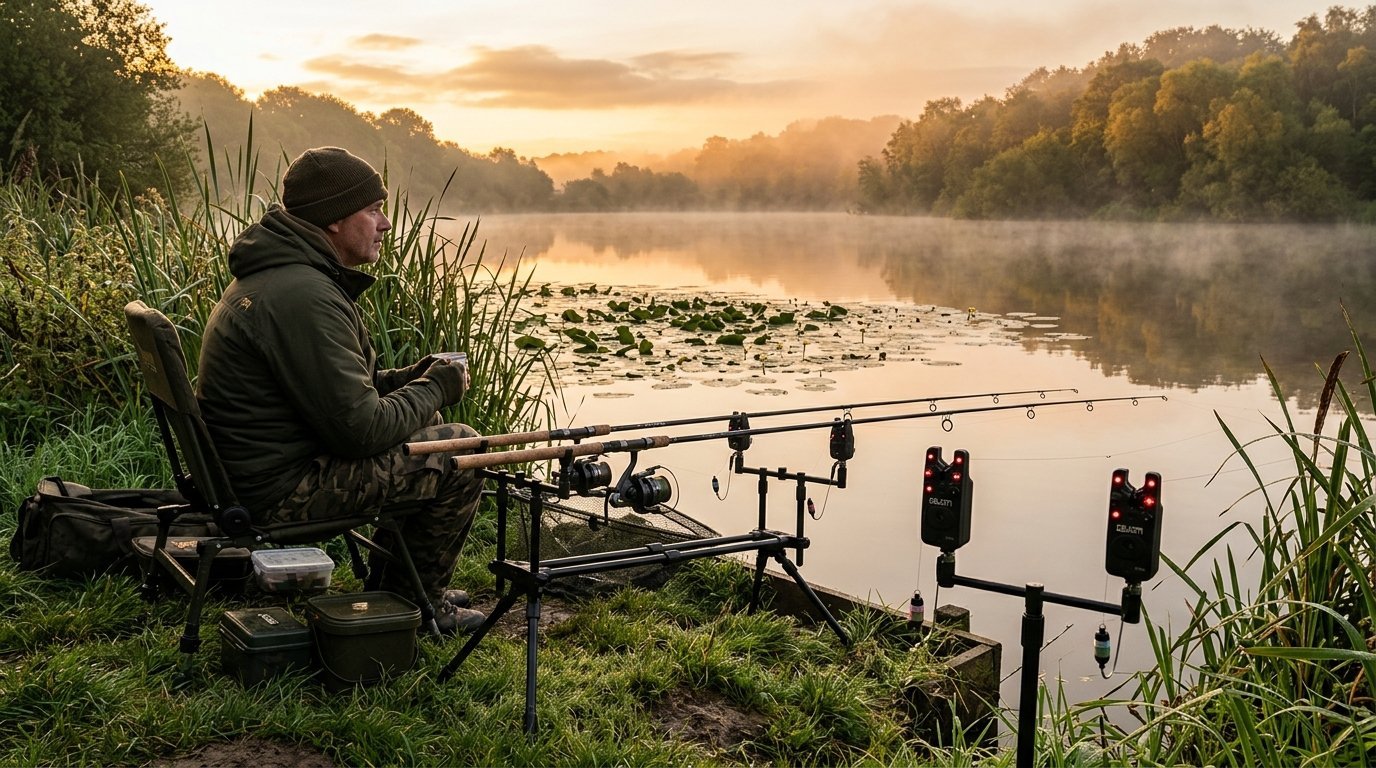
- Bolt rig (semi-fixed lead): A heavy lead is fixed semi-permanently near the hook so that when a carp picks up the bait and moves off, it feels the sudden weight, bolts in panic, and drives the hook home against the lead. You do not need to strike. The rod loads over, the reel gives line, and the bite alarm screams. It is the classic setup for hands-off carp fishing and pairs perfectly with a hair rig.
- Pop-up rig: Uses a buoyant pop-up boilie that floats just above the bottom rather than lying flat on it. This is invaluable when the bottom is weedy or silty and a normal bait would sink out of sight into the muck. Presenting the bait an inch or two up keeps it visible and in the feeding zone.
- Float rig: A simple float setup for visible, shallow-water carp you can see cruising. It is a fun, engaging, hands-on method and great for sight-fishing, but it is limited to clear conditions and calm water where you can watch the float and the fish.
| Rig name | Best use case | Skill level | Notes |
|---|---|---|---|
| Hair rig | Almost all carp fishing | Beginner to intermediate | The essential upgrade; use it everywhere |
| Bolt rig | Hands-off fishing with alarms | Intermediate | Fish hook themselves; no strike needed |
| Pop-up rig | Weedy or silty bottoms | Intermediate | Keeps bait visible above debris |
| Float rig | Clear, shallow, visible fish | Beginner | Fun and visual; limited to calm, clear water |
Gear for Carp Fishing in the US
Let me save you some money right away. You do not need to buy specialist European carp tackle costing hundreds of dollars to catch carp in America. The internet is full of gear that looks impressive and drains your wallet. The truth is that most US freshwater anglers already own something close to what they need. Here is the practical breakdown.
Rod: A nine to eleven foot medium-heavy spinning rod or a dedicated carp rod with a test curve of two to three pounds will handle almost any carp you hook. If you already own a heavier bass or catfish rod, you are probably fine to start. The gear philosophy overlaps closely with catfishing, and our catfish rod setup guide walks through similar principles for choosing a rod that can handle big, hard-fighting fish.
Reel: A 3000 to 5000 size spinning reel is the sweet spot. A model with a baitrunner or free-spool mode is ideal, because it lets a taking carp pull line freely without dragging the rod off the bank, then engages the drag when you pick up the rod. A standard spinning reel works too, as long as you fish with the bail open using a line clip or a bite alarm to detect the take.
Line: Run twelve to twenty pound monofilament as your main line, or thirty to fifty pound braid if you prefer. Mono has a bit of stretch that is more forgiving on the hookset for beginners and cushions the powerful lunges of a big fish. Braid offers no stretch and better bite detection but demands a more careful hand.
Terminal tackle: A size four to eight wide-gap hook is right for most carp baits, paired with a one to two ounce inline or flat lead and an eight to ten inch braid hooklink. That is the core of your hair rig setup, and it covers the vast majority of situations you will face.
Optional extras: A bite alarm mounted on a bank stick or rod pod frees you from staring at the rod and signals a run instantly, which matters on long sessions. A carp mat is not optional if you care about the fish, giving you a soft, safe surface to unhook and photograph a carp before release.
| Tier | Rod | Reel | Line | Terminal | Extras |
|---|---|---|---|---|---|
| Beginner (under $150) | Existing medium-heavy spinning rod | Basic 4000 spinning reel | 15 lb mono | Pre-tied hair rigs, 1.5 oz leads | None needed to start |
| Intermediate ($150 to $350) | Dedicated carp rod, 2.5 lb test curve | Baitrunner 5000 reel | 20 lb mono or 40 lb braid | Self-tied hair rigs, lead clips, range of leads | Single bite alarm, basic carp mat |
| Serious ($350 and up) | Two matched carp rods, 3 lb test curve | Two baitrunner reels | Braid main line with leaders | Full rig kit, PVA bags, method feeders | Rod pod, multiple alarms, quality mat, unhooking cradle |
Seasonal Carp Fishing Guide
Carp behavior shifts hard with the seasons, and matching your approach to the time of year is one of the fastest ways to improve your results. The table below maps where to find fish, when to fish, and what to feed them across the calendar.
| Season | Water temp | Where to find carp | Best time of day | Best bait | Notes |
|---|---|---|---|---|---|
| Spring | 50 to 65 F | Warm shallows, bays, spawning flats | Midday warmth, afternoon | Worms, corn, bright boilies | Fish move shallow to warm up and feed before the spawn |
| Summer | 68 to 82 F | Warm flats, weed beds, margins | Dawn, dusk, and through the night | Boilies and corn | Very active fish and high catch rates; prime season |
| Fall | 52 to 68 F | Feeding flats, drop-offs near deep water | Late morning through afternoon | High-protein boilies, tiger nuts | Heavy feeding as fish pack on weight for winter |
| Winter | Below 50 F | Deep basins, slow water, sheltered holes | Warmest part of the day | Small baits, worms, single boilies | Slow, sluggish fish feeding in short windows |
Right now, in August, you are sitting in the middle of prime summer carp season. Water temperatures are warm, metabolisms are high, and carp are feeding aggressively across flats and weed beds. This is the time of year when catch rates peak and a beginner has the best possible odds of landing a good fish. If you are going to make one focused push to learn carp fishing, late summer is the moment to do it.
Summer is also when night fishing comes into its own. On hot days, carp often feed cautiously through the bright midday hours and then switch on hard as light fades. The hours around dusk, through the night, and into the first light of dawn are frequently the most productive windows of the entire day. A bite alarm earns its keep here, letting you rest between runs while still catching every take. If you have only fished daylight hours, a warm summer night session can be a revelation.
A few practical notes for summer and night sessions. Keep your bait scent-heavy, since carp hunt by smell in the dark and a strong flavor trail pulls them to your spot. Pre-bait your chosen area before dark so fish are already feeding confidently when the productive window arrives. And be ready for the biggest fish of your session to come in the quiet hours, when the water is calm, the bank is empty, and the largest, warriest carp finally let their guard down.
How to Catch Carp: Tactics That Work
Gear and rigs get you to the water. Tactics put fish on the bank. These are the on-the-water habits that separate anglers who catch carp consistently from those who get lucky occasionally.
- Establish a feeding zone: Pre-baiting is the closest thing to a cheat code in carp fishing. Scatter a modest amount of bait, such as corn or crushed boilies, over your chosen spot for one or two sessions before you fish it seriously. Carp learn there is safe, free food in that area and start visiting it with confidence. When you finally fish it, they feed without suspicion and your hookbait blends right in.
- Cast accurately and quietly: A big lead crashing down on top of a group of feeding carp will clear the area instantly. Cast to the edge of your baited zone, not into the middle of the fish, and place the rig gently. Precision beats power every time.
- Play the waiting game: Carp fishing is not bass fishing. There is no need to cast and retrieve constantly. Get your rig in the right spot, set your alarm or watch your line, and let the bait do its work. Patience is a genuine tactic here, not a lack of one.
- Fight the fish correctly: When a carp takes and runs, let it run on that first powerful surge rather than clamping down and risking a break. Once the initial run slows, apply steady, firm pressure and stay in control. Your main job is to keep the fish away from snags, weed beds, and other structure where it can cut you off. Expect a good fish to give you a fight lasting close to ten minutes.
- Land it safely: Use a large landing net and draw the fish in over the mesh, never lift it by the line. Do not ever lip-grip a carp the way you might a bass. Carp have soft, delicate mouths that damage easily, so support the body properly instead.
- Catch and release: For most American anglers, carp are a sporting resource rather than table fare. Treat them as the prize they are. Wet your hands before touching the fish, lay it on a carp mat, keep it out of the water for as little time as possible, and return it gently. A well-handled carp swims off strong to be caught again another day.
If you come to carp from other freshwater species, a lot of this will feel familiar and a lot will feel new. Our bass fishing guide is a useful point of comparison for general freshwater strategy, and our walleye guide covers a species that often shares the same slow rivers and reservoir flats where carp thrive.
Carp Fishing vs. Other Species: What to Expect
If you already fish for other species, it helps to understand where carp fit in relative to what you know. The table below places carp alongside bass, walleye, catfish, and pike so you can see how the fight, the bait approach, and the technique compare, and where these fish overlap in the same waters.
| Species | Fight intensity | Bait approach | Technique type | Where they share habitat | Guide |
|---|---|---|---|---|---|
| Carp | Very high, long powerful runs | Bottom baits on a hair rig | Patient bait fishing | Slow rivers, flats, weedy coves | This guide |
| Bass | High, short bursts and jumps | Lures and live bait | Active casting and retrieving | Weed edges, structure, shallows | Bass guide |
| Walleye | Moderate, steady pull | Jigs, live bait, trolling | Active presentation near bottom | Reservoir flats, river channels | Walleye guide |
| Catfish | High, dogged and stubborn | Cut bait, stink bait, corn | Patient bottom fishing | Slow rivers, deep holes, soft bottoms | Catfish bait guide |
| Pike | Very high, savage strikes | Large lures and dead bait | Active predatory fishing | Weed beds, bays, cabbage edges | Pike guide |
The takeaway is that carp reward patience and finesse more than most predator species, but they pay you back with some of the hardest, longest fights in freshwater. If you are used to the fast action of bass or pike, the slower rhythm of carp fishing is a different kind of satisfying, and the moment a big fish finally runs makes the wait worthwhile.
Frequently Asked Questions
What is the best bait for carp fishing?
Sweet corn is the best beginner bait because it is cheap, effective, and available everywhere. For bigger and more consistent catches, boilies are the top choice, since their hardened outer shell resists small bait thieves and they carry strong flavors carp find irresistible. Tiger nuts are another excellent big-fish bait. Whatever you use, fish it on a hair rig for the best hookup rate.
What size hook should I use for carp?
A wide-gap hook in size four to eight covers most carp fishing. Use a size six as a reliable all-around starting point for corn and standard boilies. Go larger toward size four for big baits and big fish, and smaller toward size eight for cautious, heavily pressured carp or smaller hookbaits. Match the hook size to your bait so the two balance naturally on the hair rig.
Do I need a special rod for carp fishing?
No. A nine to eleven foot medium-heavy spinning rod that many US anglers already own for bass or catfish will handle most carp comfortably. A dedicated carp rod with a two to three pound test curve is a nice upgrade once you are hooked on the species, but it is not required to start. Spend your money on a hair rig and good bait before a specialist rod.
When is the best time of year to catch carp?
Summer is the peak season, with warm water, high fish activity, and strong catch rates, especially at dawn, dusk, and through the night. Fall is a close second, as carp feed heavily to build reserves before winter. Spring offers good shallow-water fishing around the spawn. Winter is the toughest, with slow fish feeding in short windows during the warmest part of the day.
Why do carp keep stealing my bait without getting hooked?
Almost always because you are fishing bait on a plain hook. Carp mouth food, feel the hard metal of a buried hook, and eject it instantly before you register a bite, leaving your bait gone and your hook empty. The fix is the hair rig, where the bait hangs on a short loop below a bare hook. The carp takes the bait, the exposed hook catches in the lip as it tries to spit, and your hookup rate climbs dramatically.
Can you catch carp from shore?
Yes, and most carp fishing is done from the bank. Carp feed in shallow margins, near weed beds, and around creek mouths that are easily reached from shore, so no boat is required. Look for feeding signs like bubbling and mudding close in, cast to the edge of your baited zone, and set up comfortably on the bank. Shore fishing is the standard and highly effective way to target carp.
What is a hair rig and why does it work?
A hair rig is a setup where the bait is attached to a short loop of line, the hair, hanging about one and a half to two inches below a bare hook, rather than being threaded onto the hook itself. It works because carp mouth and eject food. Since the bait carries no hidden hook, the fish takes it with confidence, and when it tries to spit the bait, the exposed hook rolls and catches cleanly in the lower lip. It is the single biggest upgrade a carp angler can make.
What is the biggest carp ever caught in the United States?
The US record common carp exceeds 50 pounds, with a notable fish of roughly 57 pounds reported from Cass Lake in Michigan often cited among the largest. Records vary by state and by record-keeping body, so exact figures differ depending on the source. What matters for most anglers is that carp of twenty, thirty, and even forty pounds are caught across the country every year, so genuine trophy fish are well within reach.
RELATED POSTS
View all

How to Catch Pike: The Complete Guide to Northern Pike Fishing
June 5, 2026 | by Ian
Best Carp Bait in 2026: A US Angler’s Guide to What Works and When
September 1, 2026 | by Ian
How to Catch Bluegill: Complete Guide to Bait, Rigs, and Seasonal Tactics
June 4, 2026 | by Ian