How to Catch Pike: The Complete Guide to Northern Pike Fishing
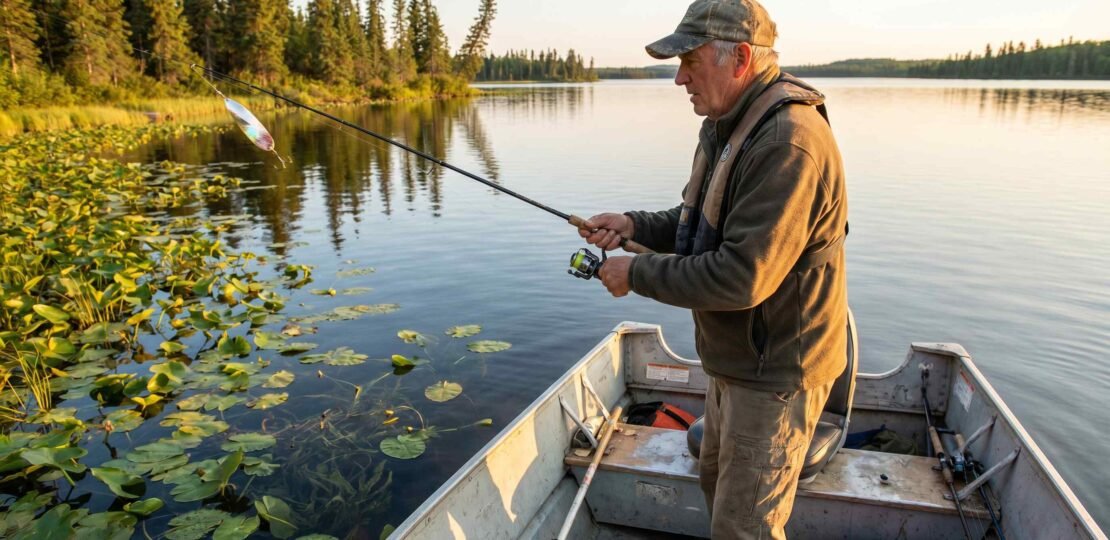
Northern pike are the freshwater fish that turn quiet mornings into chaos. One cast you’re reeling in a spoon, the next your rod doubles over as a 36-inch predator explodes from the weeds. They’re aggressive, they’re toothy, and they’re available across more of North America and Europe than almost any other gamefish. June is peak season for shallow pike action, which means right now is the best time of year to learn how to target them.
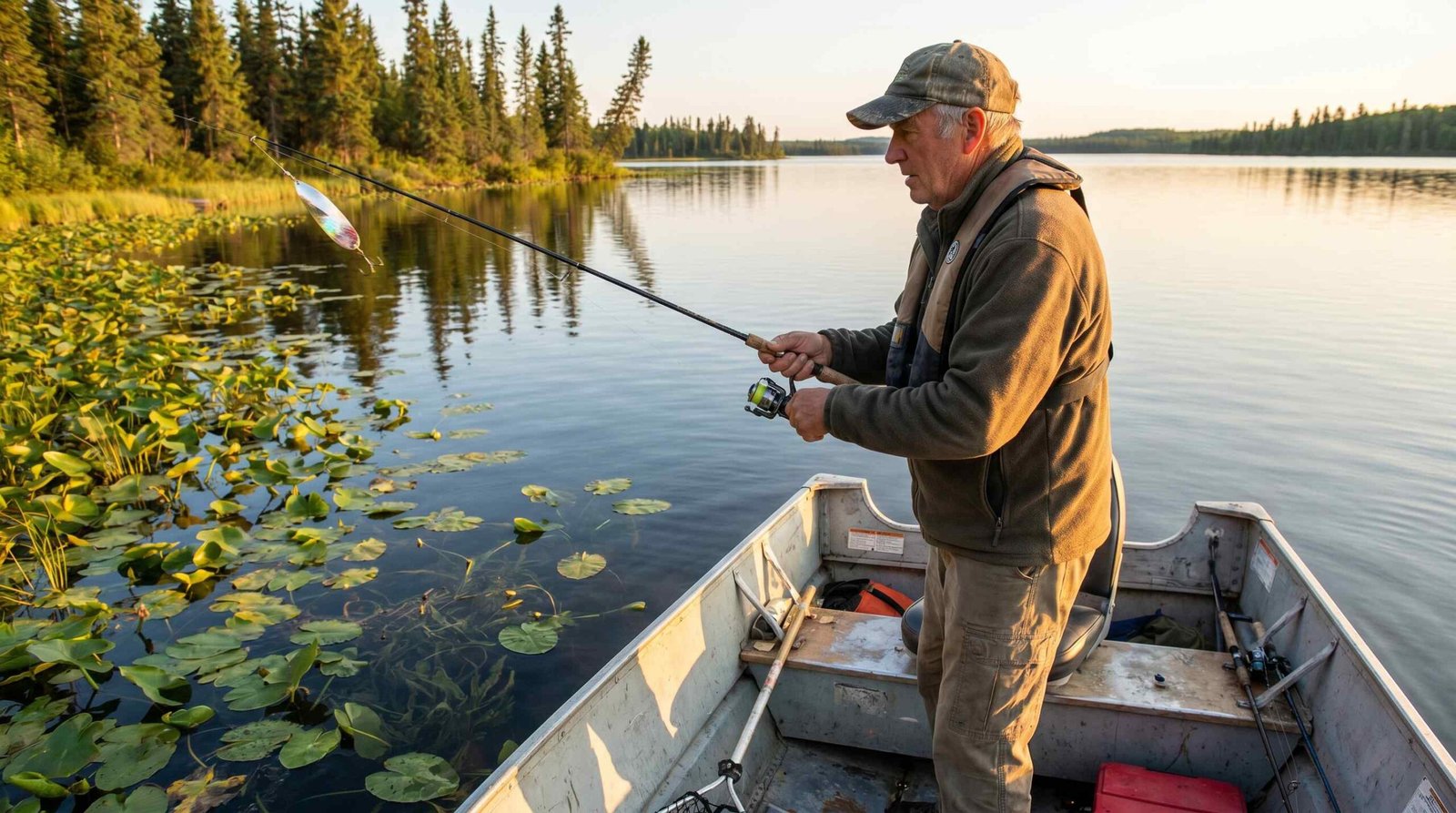
Here’s the problem most beginners hit on their first pike trip: they lose fish. Not because they’re bad anglers, and not because pike are spooky. They lose pike because pike teeth shred standard fishing line like scissors through paper. The fix is one piece of gear that almost no introductory guide leads with, but every serious pike angler considers non-negotiable. We’ll build the entire approach around it.
This guide covers the complete pike system: rod, reel, line, leader, lure selection, where to find them, how to fish each season, and how to handle these toothy predators without losing fingers or fish. By the end you’ll know more than 90% of casual anglers, and you’ll stop losing pike to bite-offs forever.
Why Northern Pike Are Unlike Other Freshwater Fish
Pike are ambush predators in the truest sense. They don’t chase prey across open water like a salmon. They hide in cover, motionless, and detonate on anything that swims past. Their bodies are built for one explosive burst of acceleration, like a torpedo with fins. This shapes everything about how you fish for them.
Size matters with pike, and they grow big. A “normal” catchable pike runs 24 to 36 inches and 3 to 10 pounds. Trophy pike push past 40 inches and 15 pounds, with the all-tackle record sitting around 55 pounds according to records cataloged by the U.S. Fish & Wildlife Service northern pike species profile. Hooking a 40-incher feels like snagging a sled dog. They pull, they shake, they thrash, and they jump.
Then there are the teeth. A pike’s mouth contains hundreds of needle-sharp teeth angled backward, designed to grip slick prey and prevent escape. Those same teeth will sever 30-pound braid in a single head shake. This is why we keep returning to the leader. If you take only one thing from this guide, take this: never fish for pike without a leader between your main line and your lure. Not “usually.” Not “in clear water.” Never. The 30 seconds it takes to clip on a wire leader is the difference between landing trophies and watching your favorite spoon swim away in a pike’s jaw forever.
Pike also have specific habitat preferences. They love weeds. Lily pads, cabbage weed, milfoil, reed beds, anything that gives them cover for the ambush. They avoid open, featureless water unless they’re cruising between weed patches. This makes them surprisingly predictable. Find the weeds, find the pike. Other freshwater predators like bass overlap in some of this water, but pike push deeper into the salad. If you’re already comfortable with our how to fish for bass approach, you’ll feel at home with pike, just scale up the gear.
Complete Pike Fishing Gear Setup (Building the System)
Catching pike consistently requires a coordinated setup. Light bass gear gets shredded. Heavy musky gear is overkill for most fish. The sweet spot is purpose-built pike tackle, and the components have to work together as a system: rod, reel, line, leader, and lure all matched to the job.
Rod and Reel for Pike
Your rod is the foundation. We suggest a medium-heavy to heavy power, fast-action rod between 6’6″ and 7’6″. Shorter rods give you accuracy for tight casts into pockets. Longer rods give you casting distance for open water and better hooksets on long casts. A 7-foot medium-heavy is the ideal all-purpose pike stick.
Spinning reels work fine for most pike fishing, especially when you’re throwing lures in the 1/4 to 1-ounce range. A size 30 to 40 spinning reel paired with a medium-heavy rod handles fish up to 40 inches without strain. When you start throwing heavy 6-inch swimbaits or large jerkbaits, baitcasting gear takes over. Low-profile baitcasters with strong drags (15+ pounds of drag pressure) let you launch heavier lures and apply more pressure on big fish. If you’ve already invested in heavy gear for closely related species, your musky rod and reel setup will absolutely work for pike, though it’s heavier than necessary for average fish.
| Tier | Total Budget | Rod Example | Reel Example | Best For |
|---|---|---|---|---|
| Starter | ~$80 | Ugly Stik GX2 7’0″ MH | Pflueger President 35 | Weekend anglers, kids, first pike trip |
| Mid-Range | ~$200 | St. Croix Triumph 7’0″ MH | Shimano Sedona 4000 | Regular pike anglers wanting better feel |
| Serious | ~$400+ | St. Croix Premier 7’6″ H | Shimano Stradic FL 4000 | Trophy hunters, multi-species systems |
Line for Pike
Braided line is the right choice for pike, almost without exception. Braid in 20 to 30-pound test offers zero stretch (so your hookset transfers directly to the fish), thin diameter (more line on the reel, longer casts), and incredible abrasion resistance against weeds and structure. Power Pro, Sufix 832, and Berkley X9 are all proven choices in the $15-25 range for 150 yards.
If you prefer monofilament, run 15 to 20-pound test minimum. Mono stretches, which dampens your hookset, but it’s cheaper and easier on knots. Either way, the main line is only half the equation. You need a leader between the main line and the lure, and that’s where every pike system either succeeds or fails.
The Pike Leader: The Most Critical Piece of Gear
This is the section that will save you more pike than any other tip in this guide. We’ve said it already, but it bears repeating: pike teeth cut through braid. They cut through fluorocarbon under 50-pound test. They cut through mono of any normal weight. A 30-pound braid that handles a 20-pound largemouth bass with no problem will fail on a 4-pound pike the moment that fish shakes its head. Without a leader, you will lose pike. Period.
Two leader options dominate pike fishing, and both work. The right choice depends on your water and presentation.
Wire leaders are the bulletproof option. Seven-strand stainless wire (often called “7-wire” or sold by brands like American Fishing Wire and Surflon) gives you zero chance of a cutoff. A 30-pound wire leader is impossible for pike teeth to sever. The downside is that wire is more visible in clear water and can reduce strikes from pressured fish. Wire also kinks if mishandled, so check it after every fish. For live bait, dead bait, and any time pike are likely to swallow the hook, wire is mandatory.
Heavy fluorocarbon leaders in 60 to 80-pound test give you a near-invisible presentation that resists pike teeth for most lure presentations. Fluorocarbon at this diameter is stiff and tough. The risk is that a pike that engulfs the lure deeply (rare with lures, common with bait) can still nick the leader near the knot. For aggressive lure fishing in clear water where finesse matters, 60-80 lb fluorocarbon is a great choice. For live bait, stick with wire.
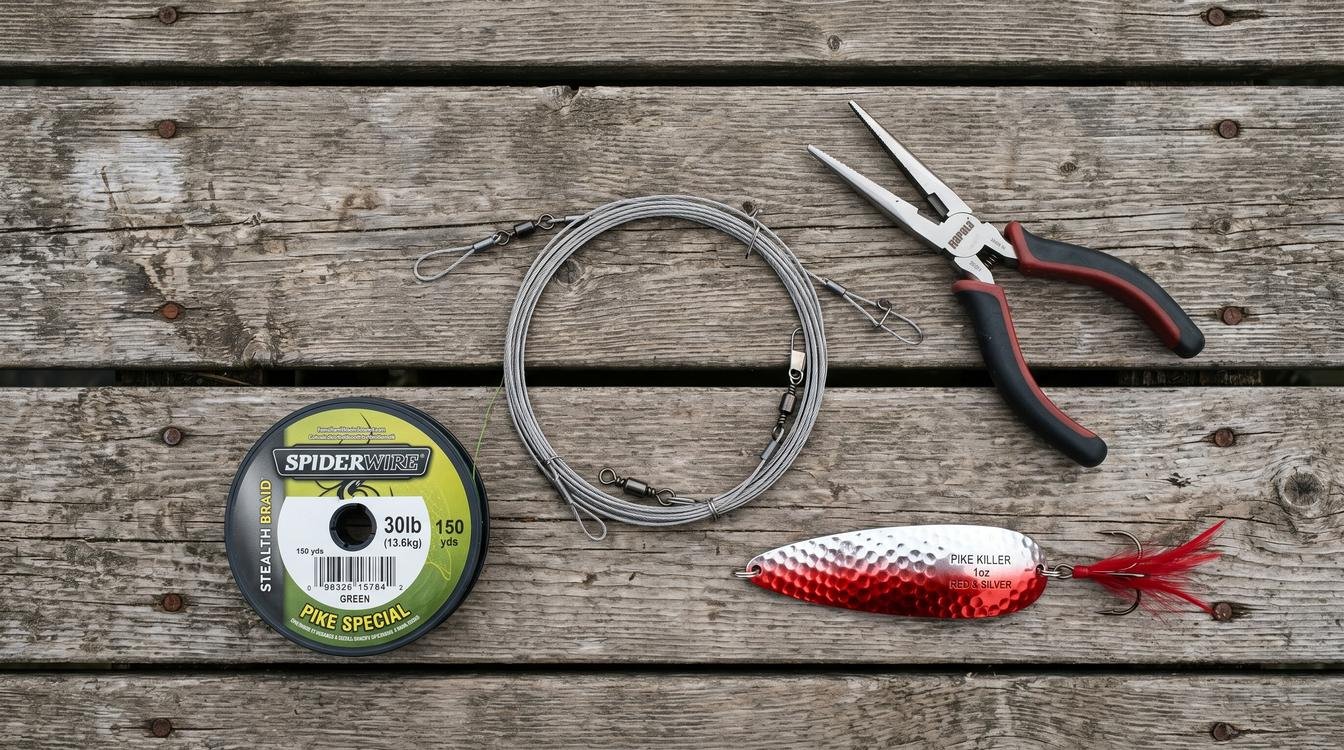
Rigging a leader is simple. We suggest this setup:
- Main line (20-30 lb braid) tied to a quality barrel swivel using a Palomar knot
- Leader material (12-18 inches of wire or 60-80 lb fluoro) tied or crimped to the other end of the swivel
- Snap swivel or coast-lock snap on the lure end so you can change lures fast without retying
Twelve to 18 inches of leader is plenty. Longer leaders cast worse and tangle more. Shorter ones risk pike grabbing the lure and getting teeth past the leader onto your main line. Pre-tie a half dozen leaders before each trip so you can swap them out quickly when one gets kinked or nicked. Your future self will thank you.
Best Pike Lures and Baits
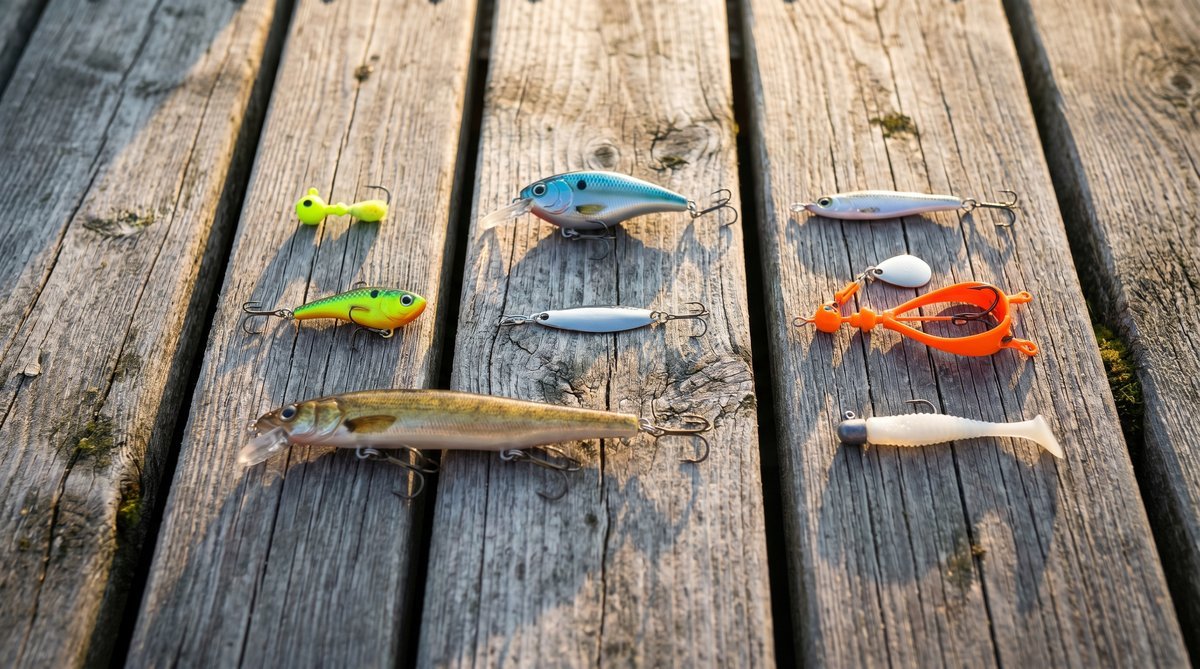
Pike eat almost anything that moves and fits in their mouth. That said, certain lure categories consistently outperform others. Build a small but versatile box covering the main categories, and you’ll cover every situation.
Spoons (The Classic Pike Lure)
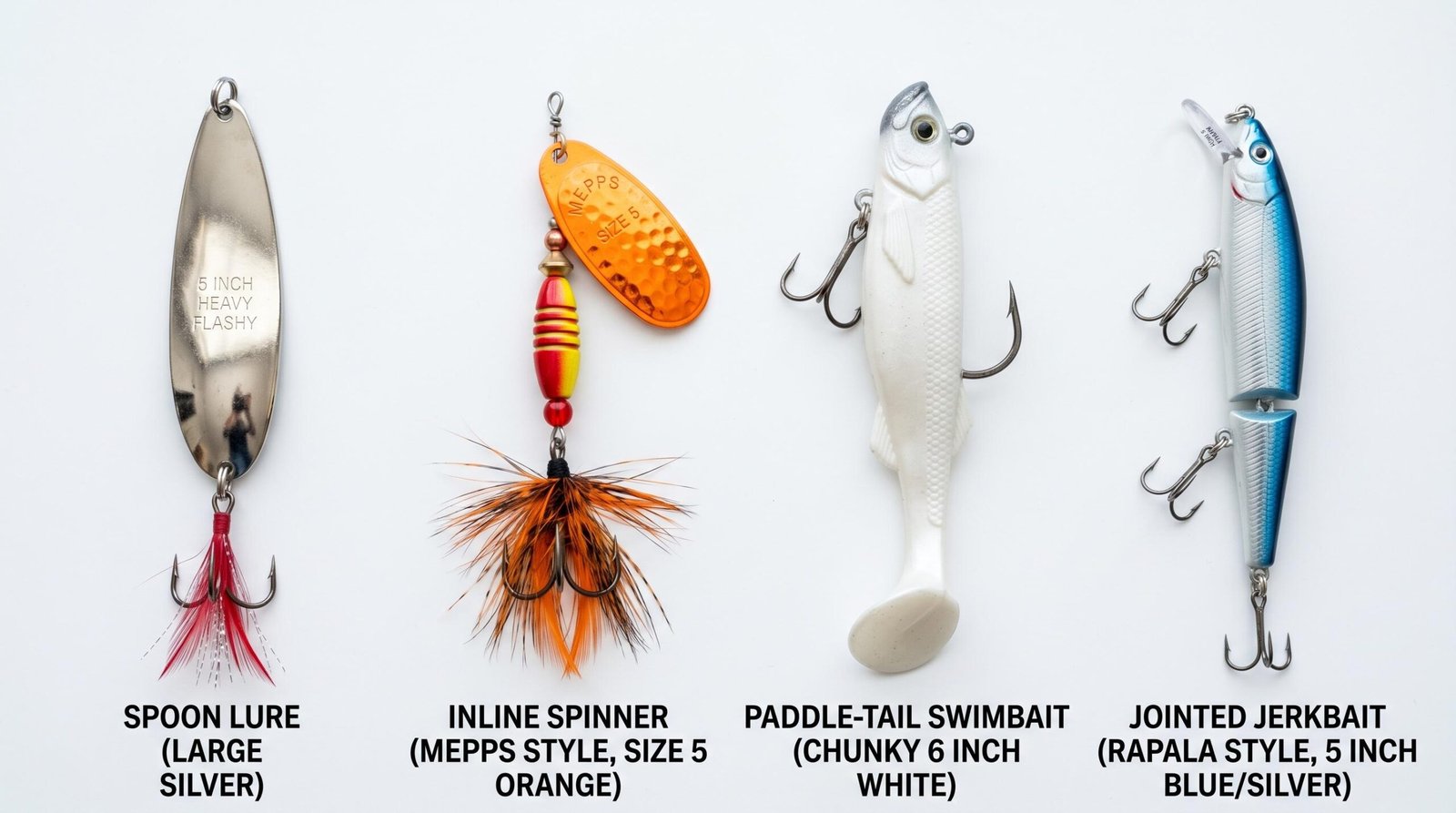
Spoons are the original pike lure, and they still produce more pike than any other category. The reason is simple physics: flash, thump, and wobble. A spoon’s wobble triggers a pike’s lateral line. Its flash mimics injured baitfish. Its weight lets you cast for distance and cover water.
Best sizes for pike run from 3/4 ounce to 1.5 ounces. The Daredevle, Eppinger Original, Williams Wabler, and Mepps Syclops are time-tested patterns. For color, start with classics: silver and red (the famous “five of diamonds” pattern) for clear water, chartreuse and white or fire tiger for stained water. Black and gold works in muddy water and low light.
Technique matters. Cast parallel to weed edges, not through them. Let the spoon sink for a count of three to five (longer in deeper water). Begin a steady retrieve, fast enough to make the spoon wobble but not so fast it spins. Vary the speed: a sudden pause or speed-up often triggers a following pike to strike.
Spinnerbaits and Inline Spinners
Inline spinners are pure pike candy in shallow water. The Mepps Giant Killer in size 4 or 5, the Blue Fox Vibrax Super Bou, and the Panther Martin in 1/2 ounce all draw vicious strikes from active fish. The spinning blade creates flash and vibration that pike detect from many feet away in murky water.
Spinnerbaits, the safety-pin-style lures bass anglers love, also catch pike when you scale them up. Look for spinnerbaits with large Colorado or willow blades and 1/2 to 1-ounce heads. They’re great for covering water fast over submerged weeds. Burn them just over the tops of the weeds and hang on.
Soft Plastics: Swimbaits and Paddle Tails
Soft plastics have taken over modern pike fishing. A 5 to 8-inch paddle-tail swimbait on a 3/4-ounce jig head presents a realistic baitfish profile that pike find irresistible, especially in summer. The Storm 360GT Searchbait, Keitech Easy Shiner in 6 inches, and the Berkley Powerbait Hollow Belly all produce.
Swimbaits shine for summer pike holding over deeper weed lines (10 to 15 feet). Cast them out, count down to the depth you want, and use a slow steady retrieve. Pause occasionally to let the bait flutter down. The strikes are often subtle, just a heavy weight, but the fight that follows makes up for it.
Jerkbaits and Large Crankbaits
Jerkbaits earn their keep on pike that are suspended off cover, especially in cool water. The Rapala Husky Jerk in size 12 or 14, the Smithwick Rogue, and the Lucky Craft Pointer all excel. Cast them out, pop the rod tip in a twitch-twitch-pause cadence, and let the lure suspend between jerks. Pike often hit during the pause.
Large crankbaits (6 to 8 inches with deep-diving bills) cover deep water fast in fall when pike push out to follow baitfish. The Rapala Super Shad Rap, Salmo Pike, and Strike King 10XD are proven fall producers. Troll them at 2 to 3 mph along deep weed edges and points.
Live Bait and Dead Bait
For sheer numbers and trophy potential, live bait is hard to beat. Large suckers (8-12 inches), creek chubs, and golden shiners all draw pike when nothing else will. Hook them through the back behind the dorsal fin with a single octopus hook, and suspend them under a slip float at the depth pike are holding.
Dead bait is a European specialty that works incredibly well in North America too. Frozen smelt, herring, or ciscoes rigged on a quick-strike rig and fished under a float or on bottom near drop-offs produce some of the biggest pike of the year, especially in cold water (early spring and late fall).
One non-negotiable for bait fishing: use wire leaders. Pike often swallow bait deeply, and a fluorocarbon leader will not survive teeth at the back of a pike’s throat. The same logic applies to other big-bait species; if you’re interested in heavy bait setups for catfish, our guide to the best catfish bait covers similar principles for a very different predator.
| Lure Type | Clear Water | Stained Water | Turbid (Muddy) Water | Best Season |
|---|---|---|---|---|
| Spoons | Excellent | Excellent | Good | Spring, Summer, Fall |
| Inline Spinners | Excellent | Excellent | Excellent (vibration) | Spring, Summer |
| Spinnerbaits | Good | Excellent | Excellent | Summer, Fall |
| Swimbaits | Excellent | Good | Fair | Summer, Fall |
| Jerkbaits | Excellent | Good | Poor | Spring, Fall |
| Large Crankbaits | Good | Excellent | Good | Fall |
| Live/Dead Bait | Excellent | Excellent | Excellent | Spring, Fall, Winter |
Pike are predictable once you understand what they want: cover for ambushing prey, and access to baitfish. Find both, and you’ve found pike. The rest is presentation.
Weeds are everything. Cabbage weed (broadleaf pondweed) is the gold standard, the kind of vegetation pike anglers dream about. Lily pads provide overhead cover that pike love. Milfoil and coontail offer dense ambush spots. Reed beds along shallow shorelines hold spring pike. If your lake has any of these, you’ve got pike water.
The single most important concept in pike location is the weed edge. This is where dense vegetation meets open water, creating a wall that pike patrol like sentries. Cast parallel to the edge, not into the weeds. Your lure travels along the edge for the entire retrieve, maximizing the time it spends in the strike zone. Pike sitting just inside the cover detect the lure and crash out to hit it. This single principle catches more pike than any other technique.
Depth changes with season. Spring pike are shallow (5 to 8 feet) right after ice-out and through spawn. Summer pike hold on deeper weed lines (8 to 15 feet) where water is cooler and baitfish concentrate. Fall pike chase baitfish into varied depths, often suspending over 15 to 25 feet of water near steep structure. The chart below summarizes this seasonal pattern.
Beyond weeds, look for points (where land juts into the water creating current edges), shallow bays (warmer in spring, full of baitfish), rock piles (especially in clearer northern lakes), and transitions where hard bottom meets soft bottom. A good contour map (paper or on your fishfinder) is invaluable. Look for contour lines that bunch together (indicating steep drop-offs) near broad shallow flats. That junction is pike gold.
| Season | Water Temp | Depth Range | Key Structure | Primary Tactic |
|---|---|---|---|---|
| Spring (post-spawn) | 45-60°F | 2-8 feet | Shallow bays, reed beds, spawning flats | Cast spoons and spinners shallow |
| Early Summer | 60-70°F | 5-12 feet | Outer edges of weed flats, points | Spinnerbaits and swimbaits along edges |
| Mid-Summer | 70-80°F | 10-15 feet | Deep weed lines, mid-lake humps | Slow swimbaits, deep crankbaits, dawn/dusk |
| Fall | 50-65°F | 8-20 feet | Steep drops, points, suspended over basins | Large crankbaits, jerkbaits, big swimbaits |
| Winter (Ice) | 32-40°F | 6-12 feet | Weed edges, shallow flats | Tip-ups with live suckers |
How to Catch Pike by Season
Pike behavior shifts dramatically through the year. The angler who adapts catches fish. The one who fishes the same way in July as in April goes home empty-handed.
Spring Pike Fishing (Post-Spawn Aggression)
Spring is the easiest time of year to catch pike. Pike spawn early, usually right at ice-out when water temperatures hit the upper 30s to mid-40s. In most northern regions this means March in southern areas, April or even May further north. Pike spawn in shallow, flooded vegetation and warm bay flats.
After spawning, pike are hungry. They sit in the same shallow areas where they spawned, recovering and feeding aggressively. This is when you can wade a shoreline with a single spoon and catch fish all day. Cast into 2 to 5 feet of water along reed beds, flooded grass, and old weed flats from last year. Retrieve slowly with sudden speed changes. Pike are still sluggish from cold water, so don’t burn lures. Let them get to the lure.
One bonus: spring pike are often grouped up. Catch one in a bay, and there are usually more. Work the area thoroughly before moving on.
Summer Pike Fishing
Summer pike are tougher. Warm surface water (above 75°F) pushes pike deeper to find cooler temperatures. They hold tight to deep weed lines, suspend near drop-offs, and bury into the thickest weed mats during midday heat.
Time of day matters more than at any other season. Early morning (the first two hours of light) and evening (the last two hours before dark) are the most productive windows. Pike hate bright direct sunlight. Cloudy days, drizzle, and even moderate wind extend the productive hours. Night fishing with topwater lures or large spoons can be incredibly productive in summer, especially in clear water.
Lure choice shifts toward slower presentations. Swimbaits and soft plastics on jig heads, fished slowly along the 10 to 15-foot weed line, outproduce flashy spoons during the heat of the day. Pike are still there, they’re just less willing to chase. Make them eat by putting the bait in their face. If you target other summer predators in similar water, our how to catch walleye guide covers many of the same deep weed-line patterns.
Fall Pike Fishing: Trophy Season
Fall is when big pike feed heaviest. As water cools through September and October, pike sense winter coming and pack on weight. The largest pike of the year are caught in fall, especially the late fall window when water temperatures drop into the 50s and 40s.
Follow the baitfish. Perch, suckers, ciscoes, and shiners group up as water cools, and pike are never far behind. Look for baitfish on your fishfinder or watch for diving birds. Once you find the bait, the pike will be nearby.
Lure choice shifts toward larger profiles. This is the time for 6 to 8-inch swimbaits, jumbo jerkbaits, and large deep-diving crankbaits trolled along main-lake points and steep drops. Slow your presentation as water cools. By November, pike often want a dead bait fished motionless under a float more than anything moving.
Winter Ice Fishing for Pike
Where ice forms, pike fishing continues all winter. The classic approach is tip-ups baited with live suckers (6 to 10 inches), set over weed edges in 6 to 12 feet of water. Use a steel leader (this is critical), a quick-strike rig with two trebles, and set the flag carefully so a feeding pike will trigger it without feeling resistance.
Spread tip-ups along a weed edge or shallow flat, typically the legal limit per angler. Drill holes 30 to 50 yards apart to cover water. Then wait, watch, and warm your hands. When a flag goes up, walk (don’t run) to the hole. Pike will often drop a bait if they feel the line move too aggressively.
Pike Fishing Techniques
Beyond gear and location, technique separates anglers who catch occasional pike from those who consistently put numbers in the boat.
Casting parallel to weed edges is the single most productive technique in pike fishing. Position your boat or yourself on shore so that you can cast your lure to run along the wall of weeds rather than at it. Your lure spends maximum time in the strike zone, and pike sitting just inside the cover have to commit to the open water to strike. This one principle outproduces every other casting approach combined.
Trolling shines on large flats, open basins, and along long points. Pull large crankbaits, jerkbaits, or weighted spinner rigs at 2 to 4 mph behind the boat, varying your trolling speed and direction to cover water until you locate active fish. Once you catch one, mark the spot on GPS and work it more carefully. Trolling is also the answer when wind blows you off your casting spots, and it’s a great way to cover unfamiliar water fast.
Vertical jigging works in two specific situations: winter tip-up holes (jigging a smaller spoon or soft plastic next to a tip-up draws attention to the live bait) and summer pike holding deep over structure. A 1/2 to 1-ounce jig with a 5-inch paddle tail dropped to the bottom and jigged in 1 to 3-foot lifts can be deadly on suspended summer fish.
The figure-8. Here’s the tip almost no introductory guide mentions, and it’s saved more fishing trips than we can count. When a pike follows your lure all the way to the boat without striking (and this happens constantly with big pike), don’t pull the lure out of the water. Sweep the rod tip down into the water and trace a slow figure-8 pattern with the lure, about 18 inches below the surface. The lure’s sudden direction changes mimic a fleeing baitfish and often trigger an instant strike. This is borrowed from musky fishing, but it works just as well for pike. Always be ready for a strike at boat-side.
How to Handle Northern Pike Safely
Pike have two hazards: their teeth and their gill covers. Both are razor sharp, and both will draw blood if you’re careless. Handle pike correctly and you’ll protect yourself and the fish.
Never put fingers in a pike’s mouth without protection (jaw spreaders or thick gloves). Even small pike can deliver a deep cut. Use long-nose pliers (at minimum 8 inches long) or a hook-out tool to remove hooks. Most pike fishing involves trebles, and trebles + a thrashing pike is exactly when accidents happen. Lay the fish on a soft surface, hold it firmly behind the head, and back the hooks out methodically.
Gill covers (the bony plates on either side of the head) hide razor-sharp edges. Never insert fingers under or behind the gill covers. The traditional “lip grip” used for bass does not work on pike. Instead, hold pike horizontally, supporting the body with one hand under the belly and the other gripping behind the head or using a quality landing net or jaw grippers. Holding large pike vertically by the jaw damages internal organs and can be fatal to the fish.
Most modern pike fisheries operate on a strong catch-and-release ethic, especially for fish over 30 inches. Pike grow slowly in cold northern waters, and a 40-inch fish may be 12 to 15 years old. Use barbless hooks or pinch your barbs when possible, keep the fish wet, and release it as fast as you can. For specific regulations and best practices in your region, the Minnesota DNR pike fishing resource is an excellent example of the guidance published by state wildlife agencies across the pike’s range.
Frequently Asked Questions
What is the best bait for northern pike?
Large live suckers (8 to 12 inches) are the single best natural bait for pike, drawing trophy fish when artificial lures fail. For lures, classic spoons in 3/4 to 1.5 ounce sizes and inline spinners like the Mepps Giant Killer in size 4 or 5 are the most consistently productive choices. Match bait size to pike size in your water: bigger water and bigger pike justify bigger baits.
Do you need a wire leader for pike fishing?
Yes, always use a leader for pike fishing. Pike teeth cut through monofilament and braided line in seconds, so a 12 to 18-inch leader of 7-strand wire or 60 to 80-pound fluorocarbon is non-negotiable. Wire is foolproof but more visible; heavy fluorocarbon is nearly invisible and resists pike teeth for most lure presentations. For live or dead bait fishing, where pike often swallow the hook, wire is the safer choice.
What pound test line should I use for pike?
For braided main line, 20 to 30-pound test is ideal: strong enough for big pike, thin enough to cast easily, and tough enough to resist abrasion from weeds. If you prefer monofilament, 15 to 20-pound test is the minimum. Always attach a leader between the main line and the lure regardless of line choice.
Where do northern pike live in a lake?
Pike live in and around weeds. Look for cabbage weed, lily pads, milfoil, and reed beds, especially where dense vegetation meets open water (the “weed edge”). Spring pike are shallow (2 to 8 feet), summer pike hold on deeper weed lines (8 to 15 feet), and fall pike often suspend near steep drop-offs and points where baitfish concentrate. Pike avoid featureless open water except when actively chasing schools of bait.
What is the biggest northern pike ever caught?
The IGFA world record northern pike, caught in Germany in 1986, weighed 55 pounds 1 ounce. Pike of 40+ inches and 20+ pounds are considered trophy fish in most North American waters, and the largest documented North American pike was a 46-pound fish caught in New York in 1940. Genuine trophy pike water typically lies in northern Canada, Alaska, and the upper Midwest.
What time of year is best for catching pike?
Spring (immediately after ice-out, when pike are shallow and aggressive) and fall (when big pike feed heavily before winter) are the two peak windows. Spring offers the highest numbers of fish and easiest fishing, while fall produces the largest pike of the year. June, the post-spawn shallow-water window in most northern regions, is widely considered the best month for combining high numbers with quality fish.
Can you eat northern pike?
Yes, pike are excellent eating fish with firm, white, mild-flavored fillets. The challenge is the Y-bones running through the upper portion of the fillet, which require a specific filleting technique to remove. Once you learn the Y-bone removal cut (plenty of video tutorials show it), pike fillets are some of the best freshwater table fare. Smaller pike (under 28 inches) tend to be best for eating, while larger fish should typically be released for the fishery.
What size hooks should I use for pike?
For treble hooks on lures, sizes #2 to 1/0 are standard for most pike lures and presentations. For single hooks on live bait rigs, 4/0 to 6/0 octopus or circle hooks handle big baits and big fish. Quick-strike rigs for dead bait typically use two #1 to #2 trebles spaced 4 to 6 inches apart to ensure solid hooksets regardless of how the pike takes the bait.
Pike fishing rewards anglers who think systematically. Get the leader right, find the weed edges, match your lure to the season, and handle fish with care. Do those four things and you’ll catch pike on lakes from Minnesota to Manitoba to anywhere pike swim. If you’re new to freshwater fishing more broadly, our bluegill fishing guide is a great place to build foundational skills before scaling up to toothy predators. But once you’ve felt a 36-inch pike crush a spoon in two feet of water, nothing else quite compares.