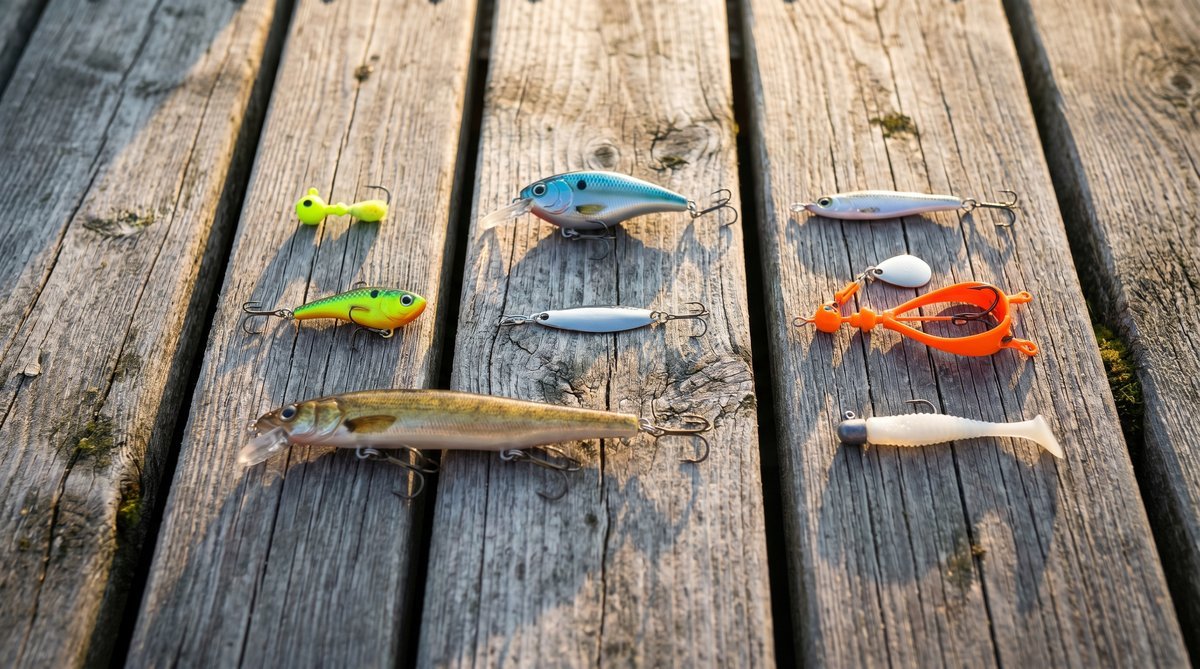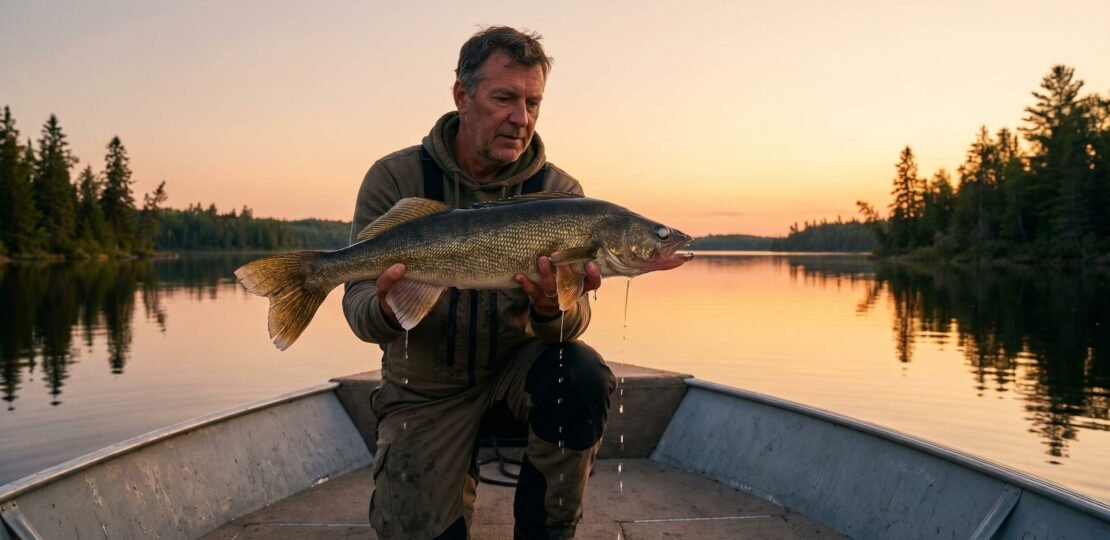
How to Catch Walleye: The Complete Guide for Anglers
To catch walleye, fish low-light periods (dawn, dusk, night, and overcast windy days) when their reflective eye layer gives them a feeding advantage. Use a jig tipped with a minnow as your primary technique, sized at roughly 1/4 oz per 10 feet of water depth. Target rocky structure, weed edges, and breaklines at 8-20 feet for most of the season, and slow your presentation. Walleye bite subtly, so a sensitive rod and sharp hooks matter.
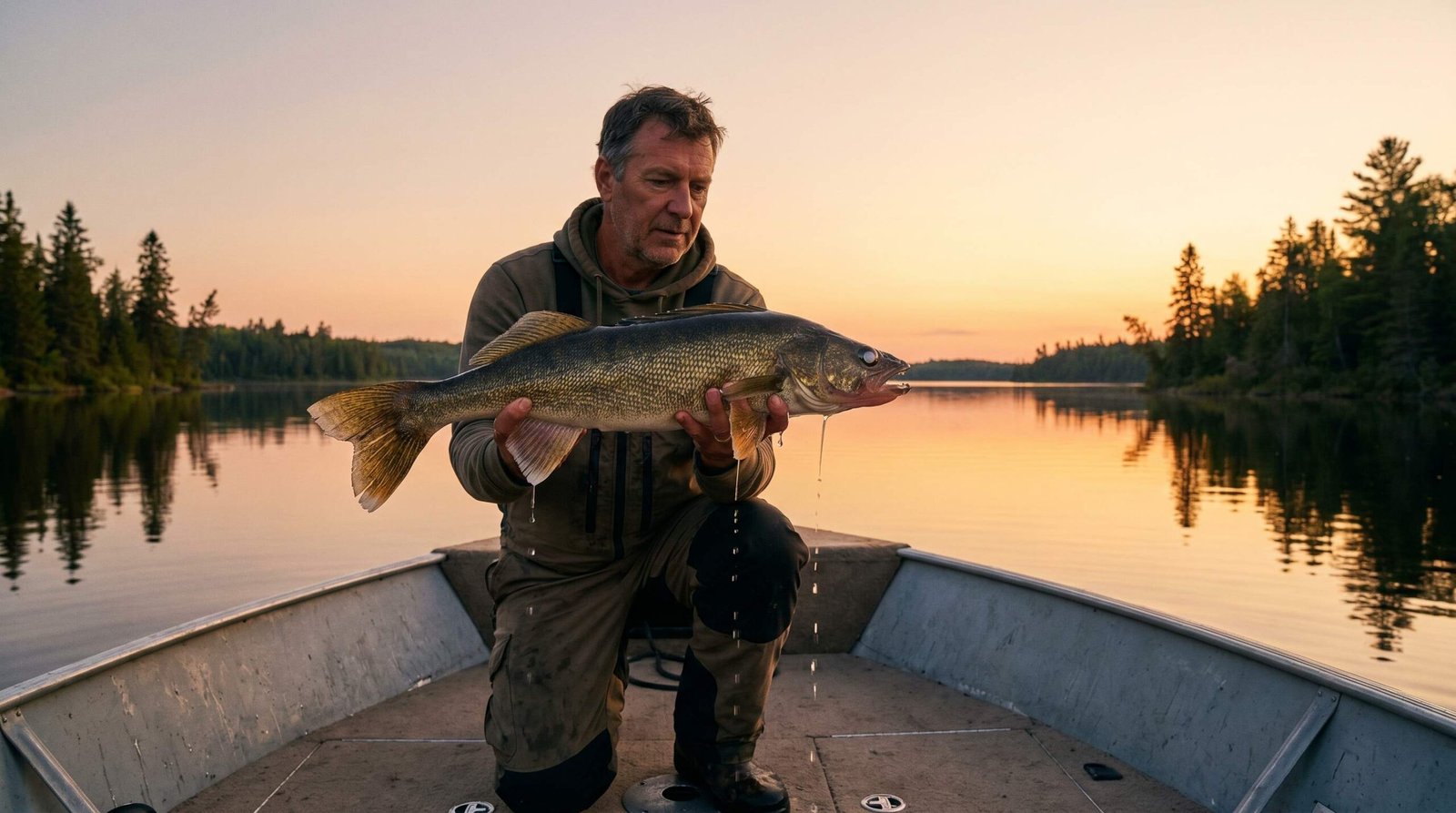
Walleye have a reputation. Some anglers call them the most challenging freshwater gamefish in North America. Others land their limit before breakfast on a windy Tuesday and wonder what the fuss is about. The difference between those two anglers is almost never gear or location. It’s understanding how walleye see the world, when they feed, and why their behavior shifts dramatically with light, wind, and water temperature.
This guide covers the techniques that consistently put walleye in the net across the entire season, from the spring spawning run through ice-out in winter. We’ll cover the biological quirk that explains nearly every walleye behavior pattern, the wind-and-wave trigger most guides won’t tell you about, and specific depth-and-presentation combinations for every month of the year.
Whether you fish from a boat, a kayak, the bank, or through a hole in the ice, the same core principles apply. Master them and walleye stop being mysterious.
What Makes Walleye Different from Other Freshwater Fish
Walleye (Sander vitreus) are members of the perch family, sharing close kinship with yellow perch and sauger. They’re built for cold-to-cool water and they’re built for low light. Understanding both of those traits is the foundation of catching them.
Their most defining feature is the tapetum lucidum, a reflective layer behind the retina that bounces incoming light back through their photoreceptors a second time. This is the same structure that makes a cat’s eyes glow in headlights, and it gives walleye exceptional vision in dim conditions. In bright sunlight, that same adaptation works against them. They become light-sensitive, retreating to deeper water or shaded structure during midday on calm sunny days. This single biological feature drives almost every timing and location decision a walleye angler makes.
Distinguishing walleye from their closest cousin, the sauger, comes down to one detail: the white tip on the lower lobe of the tail fin. Walleye have it, sauger don’t. Sauger also tend to show darker, more saddle-like blotching along the back, and they rarely exceed 18 inches, whereas walleye routinely top 24 inches in healthy fisheries. The Minnesota DNR’s walleye fishing guide is a useful reference if you want to compare regional size patterns, and the Minnesota DNR also publishes timing data for specific lake systems.
Walleye teeth are sharp. They’re built for grabbing soft-bodied prey like shiners, perch, and shad, and they’ll happily redirect those teeth onto your fingers if you’re casual about hook removal. Always carry needle-nose pliers and a glove for landing larger fish.
When to Catch Walleye: Timing and Conditions
Walleye feeding windows are almost entirely controlled by light. When you can predict the light, you can predict the bite.
Best Times of Day
Dawn and dusk are the two most reliable feeding windows. As ambient light drops below what most prey species can see clearly, walleye gain a hunting advantage thanks to the tapetum lucidum. The first hour after sunrise and the last hour before sunset are gold. After full dark, action often picks back up again, especially in shallower water, which is why walleye night fishing has developed into its own discipline.
Midday on a calm, sunny, cloudless day is generally the toughest window. Walleye drop deeper or tuck into shade. If you have to fish midday, target steep breaks into 25-30 feet of water, deep weedlines, or the shaded side of large structure.
Best Seasons
Spring is peak walleye season for shallow-water action. As water temperatures climb through the 40s and into the low 50s, walleye stage near spawning areas (typically rocky shoreline, river mouths, or gravel flats). Pre-spawn fish stage just off these areas in 6-12 feet of water, often aggressive and willing to chase. During the actual spawn, fish become harder to catch, but post-spawn females recover quickly and feed heavily for the next two to three weeks.
Summer pushes walleye deeper as surface water warms. They settle along the thermocline (usually 15-25 feet down on most northern lakes) and relate to structure: humps, points, rock piles, and weed edges. This is when trolling and slip-rigging really earn their keep.
Fall reactivates shallow feeding. As water cools through the 60s back into the 50s, walleye move back onto flats and structure, feeding heavily before winter. October and early November can produce the largest walleye of the year.
Winter ice fishing concentrates walleye on basin edges, deep main-lake structure, and the lips between the deep basin and the next shelf. Low-light feeding windows still apply, so the first and last 30 minutes of daylight under the ice are still your best shot.
Weather Conditions
Overcast days are walleye days. When cloud cover diffuses sunlight, walleye stay active shallower and longer. A flat-calm sunny day is the toughest combination you can fish. A cool overcast day with a steady wind is the easiest.
Cold fronts hurt walleye fishing for 24-48 hours after the front passes. Fish stay near structure but become lethargic and short-strike presentations. Switch to live bait rigs and slow everything down when post-front conditions hit.
The Wind Factor: The Walleye Trigger Most Anglers Overlook
If you remember one thing from this guide, remember this: wind is the single most reliable walleye trigger on most lakes. A 15-20 mph wind blowing across a structure point is worth more than any lure choice, color, or rig refinement you can make.
Here’s why. When wind creates 1-2 feet of chop on the surface, that chop disrupts how sunlight penetrates the water column. Instead of clean shafts of light reaching down to 15-20 feet, you get a fractured, scattered light pattern. To a walleye, this is the same as overcast conditions on a calm day. The tapetum lucidum advantage activates. Suddenly, walleye that would normally sulk in deep water on a sunny day are willing to chase a jig in 8 feet, on a midday wind-blown point, in full sunshine.
Wind does a second thing that compounds the first effect: it pushes plankton, which pushes baitfish, which pushes walleye. Look at a lake on a windy day and the windward shoreline (the shore the wind is blowing into) is where the food chain stacks up. Walleye follow.
The 15-20 mph Rule
A useful threshold to remember is the 15-20 mph wind range. Below 10 mph, you typically don’t get enough chop to meaningfully disrupt light penetration. Above 25 mph, fishing becomes physically difficult, boat control suffers, and presentations get sloppy. The sweet spot of 15-20 mph creates ideal chop without making the day miserable.
Reading Wind-Affected Shorelines
When you arrive at a lake on a windy day, identify the windward points and shorelines first. These are your targets. Look specifically for:
- Points that extend out into the wind. The point itself collects current and bait.
- Wind-blown rocky shorelines, especially where stained water meets clearer water (the “mud line”).
- Inside corners of bays where wind compresses bait.
- Reefs and humps on the windward side of the lake.
The leeward (calm) side of the lake on a windy day is almost always slower fishing. Don’t waste time there until conditions change.
Where to Find Walleye by Season
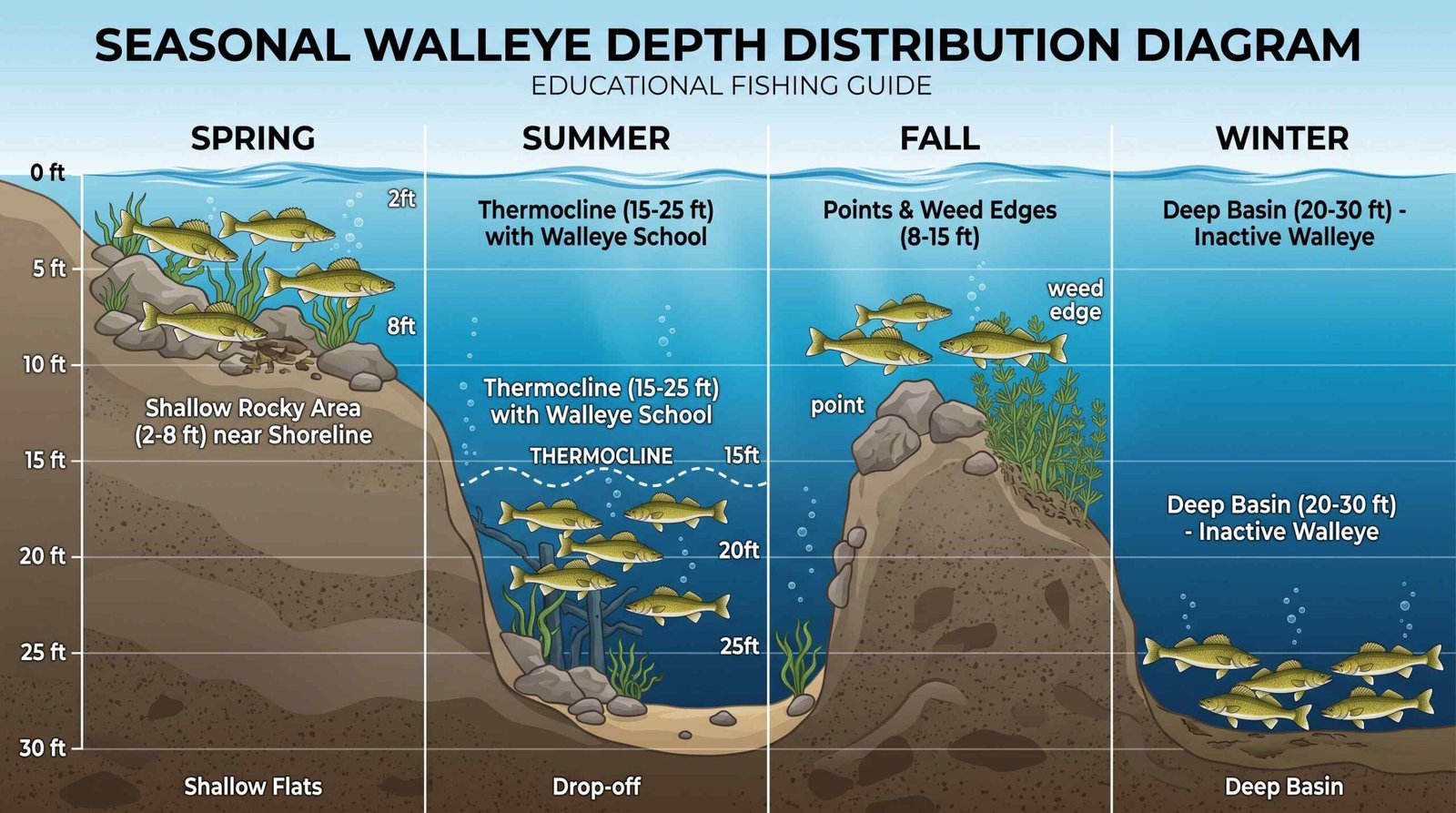
Depth shifts with the seasons, and getting depth right matters more than almost any other variable. Most anglers fish too shallow in summer and too deep in spring. Use this table as a starting point and adjust based on the specific lake you’re fishing.
| Season | Depth Range | Location Type | Notes |
|---|---|---|---|
| Spring (pre/post-spawn) | 2-8 ft | Rocky shorelines, river mouths, gravel flats | Spawning runs concentrate fish in shallow water from ice-out through mid-May depending on latitude |
| Early Summer | 8-15 ft | Weed edges, emerging rock piles, secondary points | Fish transition to summer haunts as water warms past 60°F |
| Mid-Summer | 15-30 ft | Thermocline depth, main-lake humps, deep weedlines | Suspended fish are common; trolling shines here |
| Fall | 8-20 ft | Flats, breaklines, main-lake structure | Big fish move shallow to feed heavily before winter |
| Winter (ice) | 15-30 ft | Basin edges, deep humps, channel breaks | Low-light windows still rule; dawn and dusk are prime |
Reading Walleye Structure Without a Fish Finder
You don’t need expensive electronics to find walleye structure. The features that hold walleye are visible from the surface or marked on free lake maps:
- Points: Any place where the shoreline juts out is likely a point that extends underwater. Cast or troll along the contour where the point drops off.
- Breaklines: A break is any place where depth changes quickly. The transition from shallow flat to deep basin is the classic walleye highway.
- Saddles: Underwater connections between two pieces of structure (between two humps, or between an island and the mainland). Walleye use saddles as travel routes.
- Rocky reefs: Submerged rock piles, especially in 8-15 feet of water, are walleye magnets in spring and fall.
- Inflows and current seams: On river-fed lakes, the spot where current meets still water concentrates bait and walleye.
Walleye prefer hard bottoms: gravel, rock, sand, and clean clay. They generally avoid soft muddy bottoms except when chasing forage. If you’re fishing a soft-bottom spot and not getting bit in 30 minutes, move.
5 Proven Techniques for Catching Walleye
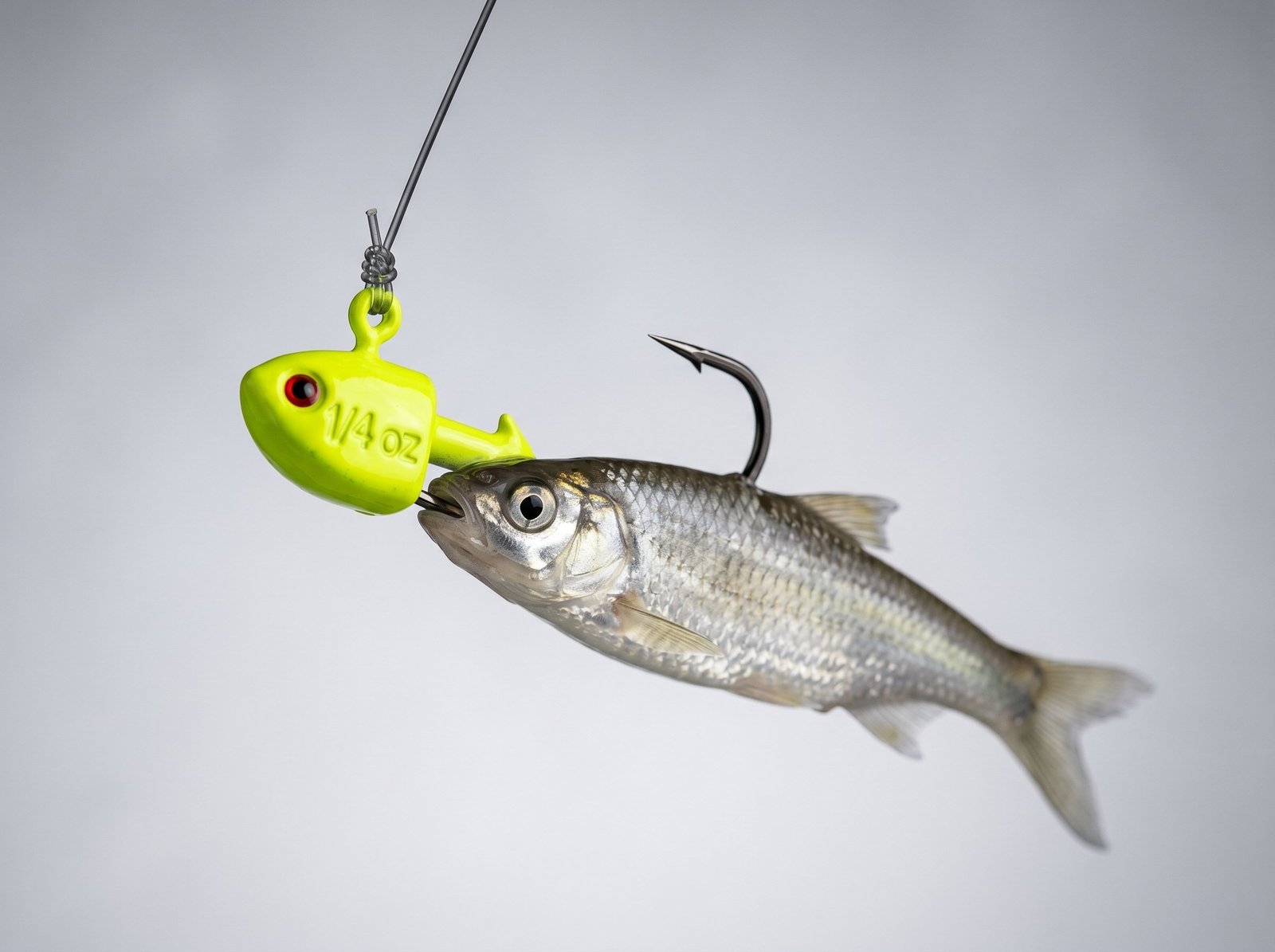
These five techniques cover roughly 95% of the situations a walleye angler will encounter. Master the first two and you’ll catch fish year-round on any walleye water.
1. Jigging: The Most Effective Year-Round Technique
If you only learned one walleye technique, walleye jigging would be the one to learn. A jig presents bait directly in the strike zone, allows for vertical or cast presentations, works in 2 feet or 40 feet of water, and triggers reaction strikes from inactive fish. It’s also the technique that teaches you the most about walleye behavior, because you’ll feel every subtle tap.
Jig weight selection by depth. The rule of thumb is roughly 1/4 oz per 10 feet of water. More specifically:
- Under 5 feet: 1/16 to 1/8 oz
- 5-15 feet: 1/4 oz
- 15-25 feet: 3/8 to 1/2 oz
- 25+ feet: 3/4 to 1 oz
You want just enough weight to maintain bottom contact and feel your jig clearly. Go heavier in current or wind. Too-light jigs blow off bottom and you lose feel. Too-heavy jigs feel unnatural and spook pressured fish.
Jigging strokes. There are three core moves:
- Lift-and-drop: Raise the rod tip 6-18 inches, then let the jig fall on a controlled semi-slack line. Most strikes happen on the fall. This is the all-around standard.
- Drag: Slowly drag the jig along the bottom with intermittent pauses. Excellent for cold water and lethargic fish.
- Deadstick: Hold the jig completely still just off the bottom. Counterintuitively deadly for negative-mood walleye after a cold front. Pair with a lively minnow.
Color selection. In clear water, natural colors win: shad patterns, perch patterns, golden minnow, and white. In stained or muddy water, switch to high-visibility colors: chartreuse, orange, pink, and firetiger. On overcast days or in low light, glow-in-the-dark and UV-painted heads add an edge.
The single most productive walleye combo, season after season, is a jig tipped with a live minnow. Hook the minnow lightly through the lips so it can still swim. For more on tackle selection, our breakdown of the Best Walleye Lures goes deeper on jig styles, soft plastic trailers, and brand-specific picks.
2. Live Bait Rigs (Slip Sinker and Lindy Rig)
When walleye go negative (cold fronts, high-pressure days, hot mid-summer afternoons), live bait rigs outperform almost everything else. The classic version is the Lindy rig, which lets a walleye pick up the bait and run with it without feeling resistance.
The basic slip sinker rig setup: A walking sinker (1/4 oz to 3/4 oz depending on depth and current) slides on your main line above a small barrel swivel. From the swivel, tie 24-48 inches of fluorocarbon leader (8-10 lb test) to a #6 or #4 hook. Hook a lively bait through the lips or under the dorsal fin.
Cast or drift the rig along structure, opening your bail when you feel a pickup. Give the fish 5-10 seconds to commit, then reel down and set the hook with a firm sweep, not a yank.
The three best live baits, by season:
- Minnows: Cold-water king. Best in spring (40-55°F) and again in late fall. Fathead minnows and shiners are both producers.
- Leeches: The warm-water producer. Once water hits the 60s, leeches often outperform minnows by a wide margin. They’re durable, lively, and walleye love them.
- Nightcrawlers: Summer specialty. Best on harness rigs or behind spinners during the hottest months. They get a lot of bites from incidental species too (perch, smallmouth), which can be a feature or a bug.
The New York State Department of Environmental Conservation’s walleye fishing primer includes additional rig variations that work well on Great Lakes systems, including bottom-bouncer and three-way setups.
3. Trolling
When you need to cover water to find scattered fish (especially in summer when walleye suspend off structure), trolling is the most efficient search tactic. There are two main trolling styles for walleye, each with its own speed window.
Spinner rigs and live bait at 1.0-1.5 mph. Use a bottom bouncer with a spinner harness baited with a nightcrawler or leech. This slow presentation is forgiving on inactive fish and excellent for covering large flats and breaklines.
Crankbaits at 2.0-2.5 mph. Faster trolling triggers reaction strikes from active walleye. Use shallow-running crankbaits (3-5 ft dive depth) along weed edges and shorelines in spring and fall, and deeper-diving cranks (15-25 ft dive depth) over main-lake structure in summer. Match crankbait color to local forage: silver and gold for clear water, chartreuse and firetiger for stained.
Trolling shines when you don’t know where the fish are. Once you catch one, mark the spot on GPS, then circle back and work the area more thoroughly with jigs or live bait rigs.
4. Night Fishing for Walleye
This is where the tapetum lucidum advantage maxes out. After full dark, walleye move shallower than most anglers believe and feed aggressively. Some of the largest walleye of the year are caught between 10 PM and 2 AM in 4-8 feet of water.
Where they go at night. Shallow flats adjacent to deeper water, the inside edges of weedlines, rocky shoreline (especially rip-rap), the mouths of incoming rivers and creeks, and around dock lights and marina structures where bait congregates under artificial light.
Lure selection for night. Increase silhouette, vibration, and rattle. Walleye still rely on sight at night, but they also home in on vibration through their lateral line.
- Stickbaits and jerkbaits (5-7 inches) are deadly cast and retrieved slowly over shallow flats.
- Larger jigs (1/4 to 3/8 oz) with bulkier plastic trailers create more silhouette.
- Rattling crankbaits work both cast and trolled.
- Glow-painted lures recharged with a UV light keep producing all night.
If you’re fishing from shore at night, our guide to the Best Walleye Lures for Shore Fishing covers specific lures that excel when you can’t reach deep water by boat.
5. Shore Fishing and Bank Fishing
You don’t need a boat to consistently catch walleye. In spring and fall especially, walleye move within easy casting range of any decent shoreline. Night fishing from shore can rival boat fishing.
Best shore spots:
- Rocky points that extend out from the shore
- Rip-rap along causeways, dams, and bridge abutments
- River current seams, especially below dams
- Dock and pier areas with lighting
- Wind-blown shorelines (apply the wind rule even when bank fishing)
For deeper coverage of shore-specific tactics, our resources on Catching Walleye from Shore and Walleye Bank Fishing get into casting angles, lure presentations from shore, and how to identify productive bank spots on unfamiliar water.
Walleye Gear Setup
Walleye gear doesn’t need to be expensive, but it does need to be sensitive. Walleye bites are notoriously subtle. A heavy bass rod will miss the soft “tap tap” that’s often all you feel from a 5-pound walleye.
| Component | Suggestion | Why It Matters |
|---|---|---|
| Rod | 6’6″ to 7′ medium-light to medium spinning rod, fast action | Sensitivity to detect light bites; fast tip for solid hooksets |
| Reel | 2000-3000 size spinning reel, smooth drag | Balanced weight for all-day jigging without fatigue |
| Main line | 8-12 lb fluorocarbon, or 10 lb braid with 6-8 lb fluoro leader | Fluoro for sensitivity and low visibility; braid for distance and zero stretch |
| Hooks (live bait) | #4 to #2 octopus or live bait hooks | Small enough to disappear into a minnow without restricting movement |
| Hooks (larger rigs) | 1/0 to 2/0 for big crawler harnesses | Larger hooks match larger baits and bigger summer walleye |
| Jig heads | 1/16 to 1 oz; carry the full range | Match weight to depth using the 1/4 oz per 10 ft rule |
| Pliers | Long-nose pliers and a jaw gripper | Walleye teeth are razor sharp; protect your hands during release |
One detail worth emphasizing: handle walleye with care during catch and release. Support their belly when lifting, avoid touching the gills, and use a rubberized landing net to protect their slime coat. A healthy released walleye today is a bigger fish next year.
Walleye Lures and Bait Quick Reference
This table summarizes which presentations shine in which conditions. Use it to decide what to tie on first before you launch.
| Presentation | Best Season | Water Temp | Water Clarity | Notes |
|---|---|---|---|---|
| Jig + minnow | All seasons | Any | Any | Most versatile, year-round producer |
| Live leech (rig or jig) | Late spring to summer | Above 60°F | Any | Outperforms minnows in warm water |
| Lindy rig + nightcrawler | Summer | Above 65°F | Any | Classic slow presentation for negative fish |
| Crankbait (trolling) | Spring and fall | 45-60°F | Clear to stained | Cover water fast to locate active fish |
| Blade bait | Winter ice | Under 40°F | Clear | Vertical jigging only; aggressive presentation |
| Spinner rig (trolling) | Summer | Above 60°F | Stained to murky | Adds flash and vibration when visibility is low |
| Stickbait (night) | Spring through fall | 50-70°F | Any | Cast and retrieved slow over shallow flats after dark |
For specific brand-and-model picks within each category, our deeper resource on the Best Walleye Lures walks through the lures that have proven themselves across multiple seasons.
Common Mistakes That Cost Anglers Walleye
Most missed walleye opportunities come down to a small number of repeated mistakes. Avoid these and you’ll see a measurable improvement quickly.
- Fishing the wrong depth for the season. Anglers stuck at 6 feet in July or grinding 30 feet in April will struggle. Adjust your depth aggressively as the seasons shift.
- Fishing midday on calm sunny days. If you can only fish midday, target the windward side of the lake and go deeper, or sleep in and fish dawn or dusk instead.
- Jigging too aggressively. Walleye usually want a slow, subtle presentation. The micro-twitch that works for bass will spook neutral walleye. Slow your strokes down by 50% and add longer pauses.
- Missing the bite. A walleye bite often feels like a single subtle “tap” or extra weight on the line. Set the hook on anything that doesn’t feel like normal bottom.
- Dull hooks. Walleye have hard mouths. Sharpen hooks regularly with a file and replace them when they fail the thumbnail test.
- Ignoring lake vs river behavior. Walleye in rivers orient to current, not depth. Fish current breaks, eddies behind boulders, and the slack-water seams below islands. Lake walleye orient to depth and structure. Approaching a river the way you’d approach a lake (or vice versa) is a common failure mode.
If you also fish for other species, the contrast can be instructive. Bass tend to be aggressive, shoreline-oriented, and respond to faster presentations. Walleye are the opposite on all three dimensions. If you want a side-by-side, our piece on How to Fish for Bass covers the bass approach and makes the contrast obvious.
Frequently Asked Questions
What is the best bait for walleye?
A live minnow on a jig is the best all-around walleye bait year-round. In warmer water (above 60°F), leeches often outperform minnows. Nightcrawlers shine in summer on harness rigs. If you had to pick one bait for the entire season, choose a fathead minnow on a 1/4 oz jig.
What depth do walleye hang out at?
Walleye depth shifts by season. Spring: 2-8 feet near spawning areas. Early summer: 8-15 feet on weed edges and rock piles. Mid-summer: 15-30 feet near the thermocline. Fall: 8-20 feet back on structure. Winter (ice): 15-30 feet on basin edges.
What time of day is best for walleye fishing?
Dawn and dusk are the most reliable feeding windows because walleye gain a vision advantage in low light. Full darkness can also produce excellent fishing, especially in shallow water during spring and summer. Calm, sunny midday is generally the toughest window unless you’re fishing a windy spot.
Do walleye bite in the rain?
Yes, often very well. Rain reduces sunlight penetration and creates surface disturbance, both of which work in the walleye’s favor. Light to moderate rain with overcast skies and some wind is one of the best weather combinations you can fish. Heavy thunderstorms are dangerous and worth avoiding.
How do you find walleye on an unfamiliar lake?
Start with a contour map and identify points, breaklines, rock piles, and reefs in the depth range that matches the current season. Check the windward shoreline first if there’s any breeze. Local bait shops and recent online reports will save you hours of searching. Once you catch one walleye, others are usually nearby on similar structure.
What size hooks for walleye?
For live bait rigs, #4 or #2 octopus-style hooks match most minnow and leech sizes. For larger nightcrawler harnesses, step up to #2 or 1/0 hooks. For jig heads, 1/0 to 2/0 hooks are typical. Always keep hooks sharp; walleye have bony mouths and dull hooks miss fish.
Are walleye hard to catch?
Walleye have a reputation for being difficult, but they’re predictable once you understand their light-driven behavior. They’re not aggressive like bass or pike, so subtle presentations and proper timing matter more than gear. An angler who fishes dawn, dusk, and windy days with a jig and minnow will catch walleye consistently.
What is the best rig for walleye?
The slip sinker rig (often called a Lindy rig) is the best all-around walleye rig for live bait. It uses a walking sinker on the main line, a barrel swivel, a 24-48 inch fluorocarbon leader, and a #4 or #2 hook with a minnow, leech, or nightcrawler. A jig with a minnow is the best single-presentation alternative.