Best Catfish Rod and Reel Combo: Pick the Right Setup for Your Target Species
December 22, 2023 | by understandfishing.com
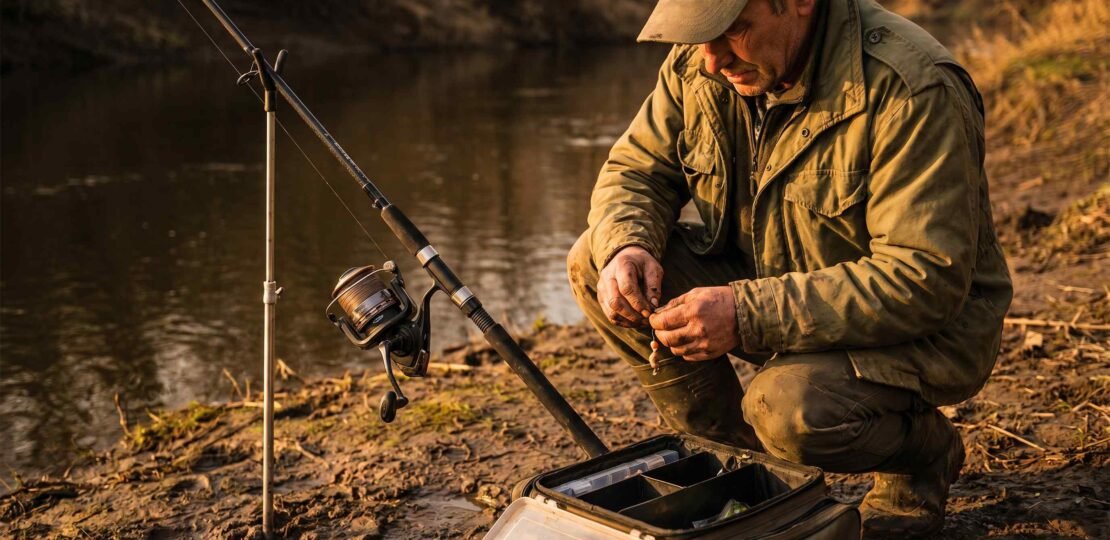
Best Catfish Rod and Reel Combo: Pick the Right Setup for Your Target Species
The best catfish rod and reel combo for most anglers is a 7-foot medium-heavy spinning setup paired with a 4000-5000 series reel spooled with 20-30 lb monofilament or braid. For targeting big blue catfish or flathead over 30 lbs, upgrade to a heavy-action rod and a 6000-8000 series reel with at least 20 lb of drag.
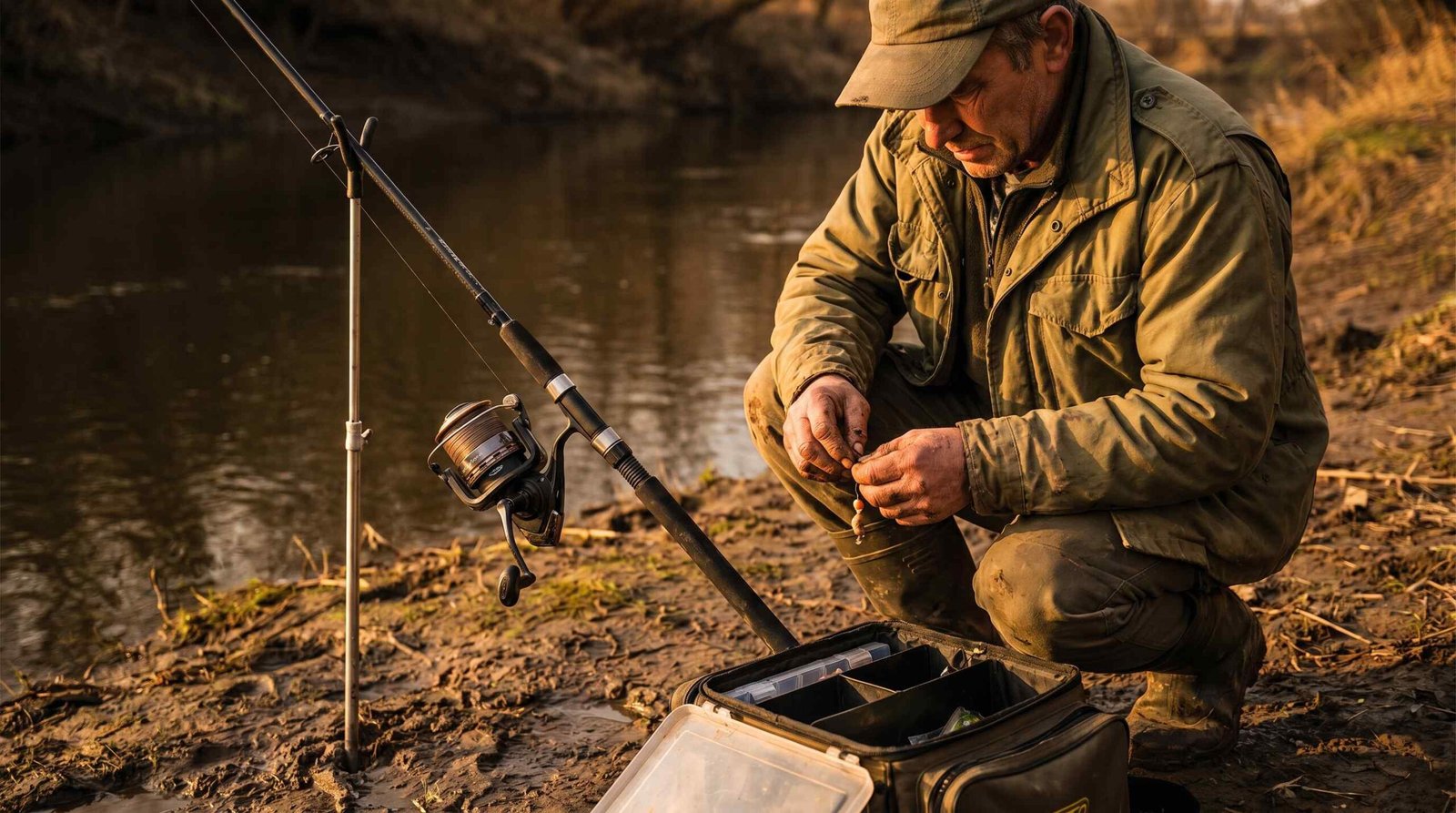
Most buyers search “best catfish combo” and land on roundups that hand you three product picks with zero context. That approach fails because a combo built for 5-pound channel cats will get destroyed by a 40-pound blue, and a heavy flathead rig is overkill (and miserable to use) when you’re fishing a small farm pond. The right catfish rod and reel combo depends on which catfish you actually plan to catch, where you’re fishing, and whether you’ve used a baitcaster before.
This guide breaks down the decision the way an experienced catfisherman would walk you through it at the boat ramp. We’ll start with the spinning vs baitcaster question because that’s where most buyers stall out. Then we’ll cover species-specific gear because channel, blue, and flathead catfishing are practically three different sports. Finally, we’ll get into specific combos at three price tiers and the technical specs that actually matter when a 30-pounder is pulling your rod tip underwater.
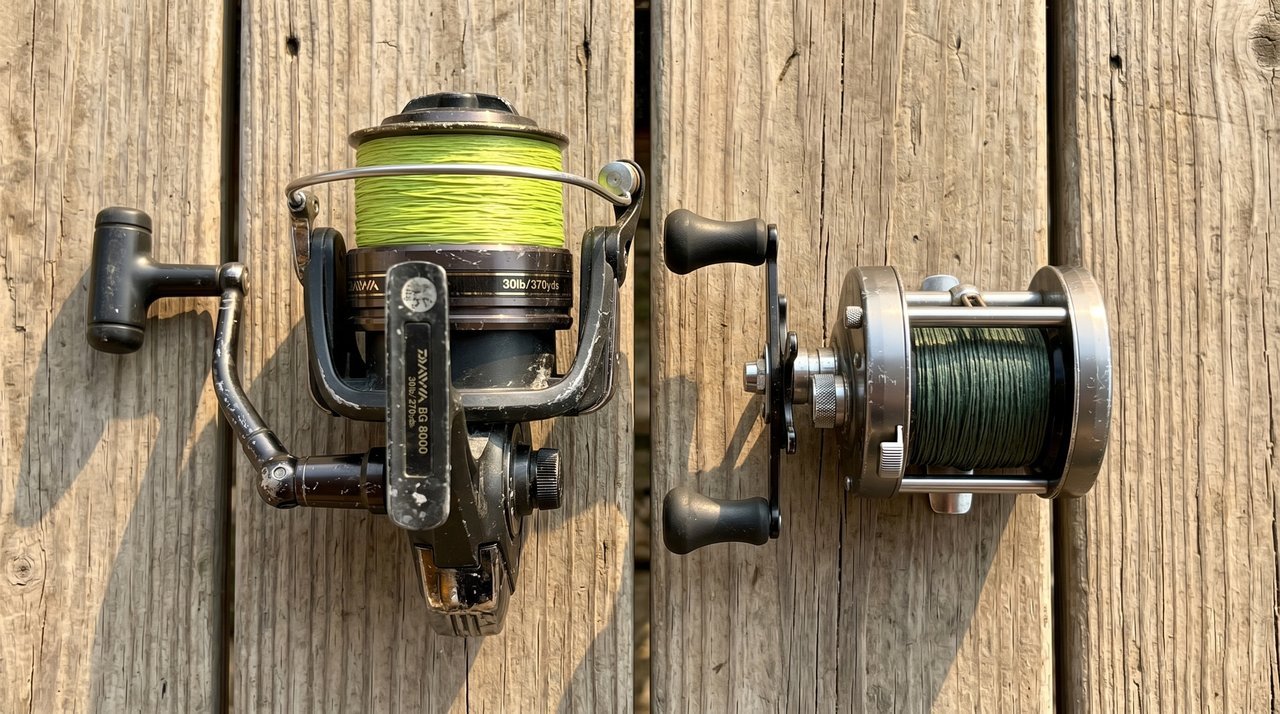
Spinning vs. Baitcaster for Catfishing: Which Setup Do You Need?
This is the first decision and the one most guides skip entirely. The short version: spinning is right for 80% of catfish anglers. Baitcasters earn their keep when you’re slinging heavy weights, fishing big rivers for trophy blues, or fighting flatheads out of timber. Here’s how to actually decide.
When a Spinning Combo Wins
A spinning catfish combo is the right call for general-purpose channel cat fishing, anyone new to catfishing, and any time you’re fishing lighter rigs (1-3 oz of weight). Slip sinker rigs, Carolina rigs, and small chunk baits all cast beautifully on a spinning setup. The learning curve is minimal: hand the rod to a 10-year-old and they’ll be fishing in 30 seconds. Spinning reels also handle backlash-free under load, which matters when a catfish takes a long, hard run.
For most pond, lake, and small-river catfishing, a quality spinning catfish combo will do everything you need. We’d put 75% of new catfish anglers on a 7-foot medium-heavy spinning rig and not lose sleep over it.
When a Baitcaster Earns Its Spot
A catfish baitcaster combo shines when you’re fishing heavy bank rigs (4-8 oz of lead), throwing big cut bait or live bait long distances, or managing heavy braided line (50-80 lb). Baitcasters give you more line capacity per reel size and let you thumb the spool during the cast for accuracy. For big-river blue cat fishing, where 6-ounce no-roll sinkers and skipjack chunks are standard, a baitcaster is genuinely better.
The catch: baitcasters require an hour of practice to avoid backlashes, and they’re harder to fish on the fly. If you’re already comfortable with a baitcasting reel from bass fishing, the transition to catfishing is easy. If you’ve never used one, start with spinning and add a baitcaster later when you know you need it.
| Factor | Spinning Combo | Baitcaster Combo |
|---|---|---|
| Cast distance (heavy weights) | Good with 1-4 oz | Better with 4-10 oz |
| Line capacity | Adequate (200+ yds of 20 lb) | Excellent (300+ yds of 50 lb braid) |
| Heavy braid line management | Can twist under load | Handles 50-80 lb braid cleanly |
| Best for species | Channel cats, smaller blues | Big blue cats, flathead |
| Best situations | Ponds, small lakes, light rigs | Big rivers, heavy bank rigs, trophy hunting |
| Learning curve | Minimal | Steeper (backlash management) |
| Price for comparable quality | Generally less expensive | Slightly higher at every tier |
Catfish Combo Guide by Target Species
Here’s the part of the decision nobody talks about: channel, blue, and flathead catfish are not interchangeable targets. They eat differently, fight differently, and live in different habitats. The gear that’s perfect for one is wrong for another. If you buy one combo and rotate species, build around the biggest fish you realistically plan to catch.
Channel Catfish: The Everyday Setup
Channel cats are the bread and butter of American catfishing. Most run 1-15 pounds, with occasional fish in the 20-pound range. According to the US Fish and Wildlife Service, channel catfish are a highly versatile freshwater species found across nearly the entire country, which is why they’re the species most beginners target.
For channel cats, we suggest a 6.5 to 7.5 ft rod, medium-heavy power, with a moderate-fast tip. The medium-heavy power gives you enough backbone to drive the hook into a channel cat’s tough mouth, while the moderate-fast tip keeps just enough sensitivity to detect a soft pickup on a chicken liver or stink bait.
Pair it with a spinning reel in the 3000-5000 series (a 4000 is the sweet spot), or a baitcaster with a 7:1 gear ratio if you’re already comfortable with that platform. Spool up with 12-20 lb monofilament or 20 lb braid. Channel cats eat almost anything you throw at them: cut shad, chicken liver, hot dogs, prepared baits, nightcrawlers. They take well on slip sinker rigs, which is why a versatile mid-weight setup covers them perfectly.
Blue Catfish: The Power Setup
Blue cats are a different animal. Fish in the 10-50 pound range are common in big rivers like the Mississippi, Missouri, James, and Santee Cooper, and trophy fish over 100 pounds get caught every year. NOAA classifies blue catfish, the largest native catfish species in North America, as a major sport fish across the southern and mid-Atlantic United States.
For blue cat work, step up to a 7-9 ft rod, heavy power. The longer rod adds casting distance for big cut bait and gives leverage when a 30-pounder dives. The heavy power isn’t optional: blue cats hit hard, run hard, and don’t quit until they hit the boat.
Reel selection depends on platform. On spinning, look at 5000-8000 series reels with sealed drags rated at 20+ lb. On baitcasting, look for a round-style reel like an Abu Garcia Ambassadeur or a low-profile reel with reinforced drag stack. Spool with 20-50 lb monofilament or 40-65 lb braid. Most experienced blue catters run braid with a 50-80 lb monofilament shock leader to absorb the lunge of a big hookset.
Flathead Catfish: The Heavy-Duty Setup
Flathead fishing is its own beast. These fish eat live prey almost exclusively (large sunfish, bullheads, perch), they hold in timber and rock structure, and they have to be turned away from cover the second they’re hooked. A 30-pound flathead in heavy laydowns will wrap you up in 10 seconds if your gear can’t muscle them out.
Build for flatheads with an 8-10 ft rod, heavy or extra-heavy power. Pair it with a large spinning reel (8000+) or a conventional/baitcaster with 25+ lb of drag. Run 40-80 lb braid with a heavy monofilament or fluorocarbon leader. Some serious flathead anglers go straight to 80 lb braid with a 100 lb mono leader at the hook.
This is overkill for channel cats and on the heavy end for blues, but flathead fishing rewards heavy gear. Underbuilt setups lose fish, period.
| Species | Typical Weight | Rod Power | Reel Size | Line Weight | Best Setup Type |
|---|---|---|---|---|---|
| Channel catfish | 1-15 lbs | Medium-heavy | Spinning 3000-5000 | 12-20 lb mono / 20 lb braid | Spinning combo |
| Blue catfish | 10-50 lbs (100+ possible) | Heavy | Spinning 5000-8000 / Baitcaster | 20-50 lb mono / 40-65 lb braid | Either, baitcaster preferred for big rigs |
| Flathead catfish | 10-50 lbs (80+ possible) | Heavy or extra-heavy | Spinning 8000+ / Conventional | 40-80 lb braid + heavy leader | Baitcaster or conventional |
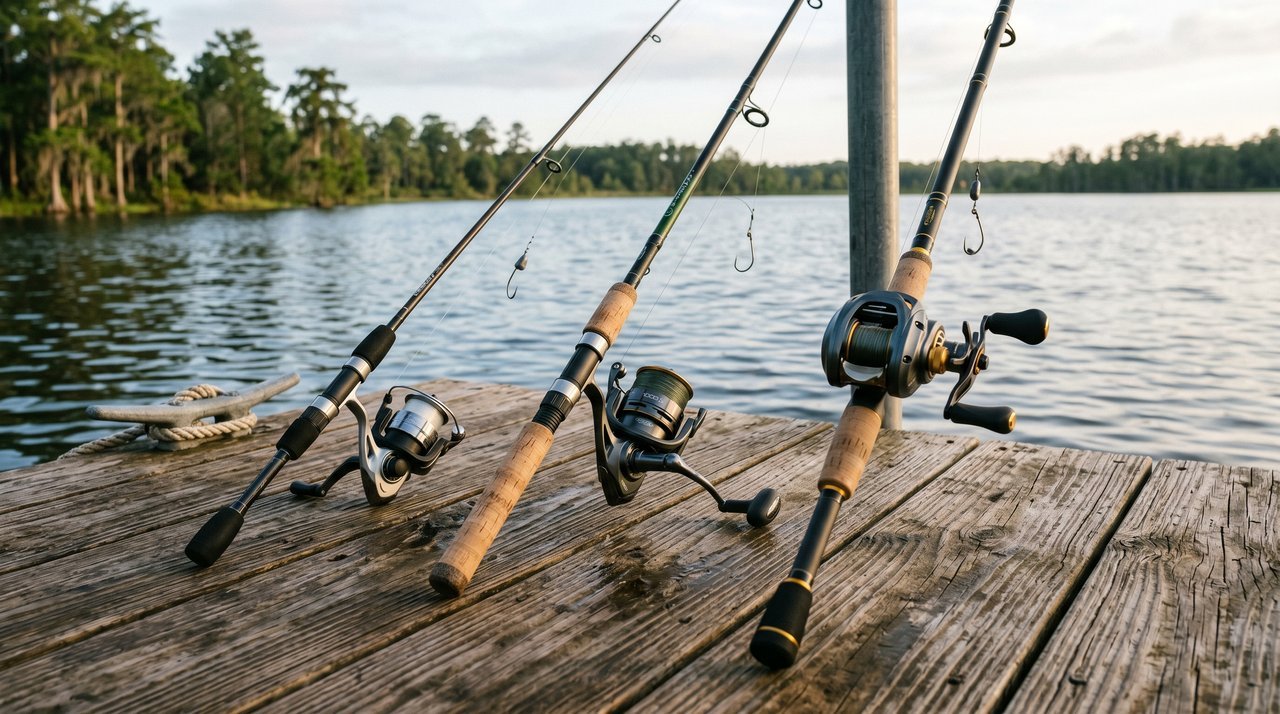
Best Catfish Rod and Reel Combos by Budget
These are real combos available at major retailers, organized by what you can spend. We’ve fished similar setups in each tier and noted the realistic limits of each.
Budget Picks (Under $75)
The Zebco Big Cat Spinning Combo is the standard entry-level catfish rig. You get a 7-foot medium-heavy rod and a Zebco spinning reel pre-spooled with 20 lb line, usually for $40-55. It handles channel cats and small blues fine. Don’t expect it to survive a 30-pounder in heavy current.
The Ugly Stik Catch Ugly Fish Catfish Combo sits at $60-75 and is genuinely the best value at this price point. The Ugly Stik blank is nearly unbreakable, the reel has an okay drag system, and the whole thing will outlast cheaper rigs by years. We’d put any new catfish angler on this combo without hesitation.
The Eagle Claw Catfish Combo rounds out the budget tier at $50-65. Lighter than the Ugly Stik, slightly less robust, but a solid second rod for a multi-rod bank fishing setup.
The honest limitation at this tier: budget reels have weaker drag systems (often 10-12 lb max) and bushing-based rather than ball-bearing construction. They handle channel cats and 10-pound blues just fine. They start showing weakness on bigger fish.
Mid-Range Picks ($75-$150)
This is the tier where you get noticeably better drag, better line capacity, and a reel that will last 5+ seasons of regular use.
The Ugly Stik Elite Spinning Combo in the medium-heavy or heavy power, paired with a 4000-5000 size reel, runs $90-130. Better blank, better guides, and a reel with a real drag stack. Excellent all-around channel and mid-size blue cat combo.
The Penn Fierce IV Spinning Combo at $100-140 is the value pick for saltwater-grade durability. The Fierce IV reel has a sealed body and full metal construction. For brackish-water catfishing or anyone fishing dirty/sandy environments, this reel outlasts comparable freshwater-only options.
The Shakespeare Tiger Big Water Combo at $80-110 is the budget-friendly baitcaster pick. You get a 7-foot heavy rod and a round-style baitcaster with decent line capacity. Good first baitcaster for someone moving into bigger fish.
Premium Picks ($150+)
The premium tier is where serious catfishermen end up after they’ve broken a budget combo on a big fish.
The Shimano Spheros SW paired with a heavy catfish rod (built into a combo or sold separately) is bulletproof. The Spheros has a fully sealed body and a smooth drag rated well above what you’ll ever need for catfishing. Combo prices range $200-300 depending on rod.
The Penn Battle III Combo at $180-250 is the sweet spot for big blue cat hunters. The Battle III reel has 20+ lb of drag in the 6000-8000 sizes, sealed construction, and a reputation for taking abuse. Pair it with a heavy 8-foot rod and you’ve got a setup that’ll handle anything that swims in freshwater.
Whisker Seeker Tackle makes catfish-specific combos in the $200-400 range with rods designed around real catfish biology: heavy butt sections, sensitive tips, and EVA grips. If you’re a dedicated catfisherman, the specialty brand investment pays off.
| Combo | Price Range | Rod Power | Reel Size | Max Drag | Best for Species |
|---|---|---|---|---|---|
| Zebco Big Cat | $40-55 | Medium-heavy | 4000 | ~10 lb | Channel cats |
| Ugly Stik Catch Ugly Fish | $60-75 | Medium-heavy | 4000 | ~12 lb | Channel cats, small blues |
| Ugly Stik Elite | $90-130 | Medium-heavy or heavy | 5000 | ~15 lb | Channel cats, mid blues |
| Penn Fierce IV | $100-140 | Medium-heavy or heavy | 5000-6000 | ~17 lb | Mid-size blues |
| Penn Battle III | $180-250 | Heavy | 6000-8000 | 22-25 lb | Big blues, flathead |
| Shimano Spheros SW | $200-300 | Heavy | 6000-8000 | 22+ lb | Trophy blues, flathead |
| Whisker Seeker Specialty | $200-400 | Heavy to XH | Varies | 20+ lb | Serious catfishing, any species |
If you’re weighing whether to skip the combo route entirely and build your own setup, our guide on buying rod and reel separately walks through when piecing it together saves money versus when a combo is genuinely the better deal. We’ve also published a deeper review of the best catfishing combos for buyers ready to compare specific models head-to-head.
What to Look for in a Catfish Rod and Reel Combo
Here’s what actually matters in a catfish combo, with the marketing language stripped out.
Rod Action and Power
Two specs get confused constantly: power and action. They’re different things.
Power is how stiff the rod is overall. Medium-heavy is the workhorse for catfishing. Heavy is for big blues and flatheads. Extra-heavy is for trophy fish in heavy cover. Power drives your hookset and determines how much fish-fighting muscle the rod has.
Action describes where the rod bends. Fast action bends in the top 25%. Moderate-fast bends through the top third. Moderate bends through the upper half. For catfishing, a moderate-fast tip is ideal: enough sensitivity to detect a soft bite, enough backbone in the lower section to drive the hook home.
Avoid extra-fast action rods for catfishing. They’re built for bass tournament hooksets on plastic worms, not for the long, sustained pressure of fighting a big catfish.
For more on matching rod specifications across price points, In-Fisherman’s breakdown of top catfish rods covers the rod-only side of the equation in depth.
Reel Line Capacity and Drag
Catfish run hard. A hooked 20-pound blue can pull 30 yards of line in one run, and a flathead in heavy cover will burn 50 yards trying to wrap you up. Line capacity matters more than for almost any other species.
For a spinning reel, look for at least 200 yards of 20 lb monofilament capacity on a 4000-5000 size, or 300+ yards of 40 lb braid capacity on a 6000-8000.
The drag system is the single most important reel feature for catfishing. Cheap reels use a stack of two or three small washers; quality reels use a stack of carbon-fiber discs that deliver smooth, consistent pressure under heavy load. We suggest a minimum of 15 lb of max drag for serious catfishing and 20+ lb for big blue or flathead work. Anything less and you’ll burn the drag out on the first 30-pound fish.
Line and Leader Setup
Monofilament and braid both work for catfishing, and the right choice depends on what you’re fishing for.
Monofilament has natural stretch, which is forgiving during the hookset and fight. It’s cheaper, easier to handle, and almost invisible underwater. The downside is lower capacity (mono is thicker per pound than braid) and slow line memory (mono coils when you pull it off the spool).
Braid has zero stretch, much higher strength per diameter, and lasts for seasons before needing replacement. The lack of stretch gives you better bite detection, which matters for live bait flathead work. The downsides are visibility (braid is opaque), cost (3-4x mono), and a tendency to dig into itself on spinning reels under heavy load.
The hybrid solution most experienced catfishermen use: braid main line with a monofilament leader. You get the sensitivity and capacity of braid with the stretch and abrasion resistance of mono at the business end. A 50 lb braid main with a 4-foot 50 lb mono leader is a standard big-cat setup.
Rod Length and Handle
Rod length is a function of where you’re fishing.
Bank fishing rewards longer rods (8-10 ft). The extra length gives you casting distance to reach deep holes and channel edges, plus leverage to fight fish through structure. Long rods also keep your line angle high over snags.
Boat fishing favors shorter rods (6.5-7.5 ft). They’re easier to manage in a rod holder, easier to swing fish into the boat, and easier to maneuver in tight quarters.
Handle length matters too. Catfish rods need long rear grips (12-16 inches) for two-handed casting with heavy weights. Short bass-style handles aren’t built for the leverage catfish rigging requires. For the full rigging walkthrough that goes with this gear discussion, our catfish rig setup guide covers terminal tackle, knots, and rig variations.
Quick Setup Guides
Setting Up a Spinning Catfish Combo
Out of the box, here’s the fast path to fishing.
First, spool the reel. For channel cats, use 17-20 lb monofilament. For blues and bigger fish, use 30 lb braid with a 30-50 lb mono leader. Fill the spool to about 1/8 inch from the lip, no more. Overfilled spinning reels throw wind knots constantly.
Next, tie a slip sinker rig: thread a 1-3 oz egg sinker on your main line, add a small barrel swivel, attach a 24-30 inch mono leader, and tie on a 4/0 to 7/0 circle hook. For a Carolina rig, swap the egg sinker for a bullet weight and add a bead between the sinker and swivel.
Set the drag to roughly 70% of your line test. For 20 lb line, set drag to pull at about 14 lb. Pull line off the reel by hand at the rod tip until it slips with steady pressure. Too tight and you’ll break off on the strike; too loose and you’ll lose ground during the fight.
For matching your gear with the right offerings, our guide on pairing your setup with the right catfish bait covers cut bait, prepared baits, live bait, and which works best on each species.
Setting Up a Baitcaster Catfish Combo
Baitcaster setup takes a bit more attention but pays off in casting distance and line capacity.
Spool with 40-65 lb braid, leaving about 1/8 inch from the rim. Use mono backing if you don’t have enough braid to fill the spool, otherwise braid will slip on the bare spool under load.
Set the braking system. Most modern baitcasters use a magnetic or centrifugal brake system plus an external spool tension knob. Start with the tension knob set so that your bait (weight attached) falls slowly to the ground when you release the spool. Set the brake system to around 50% and back it off as you get comfortable. Tighter brakes = less distance, fewer backlashes. Looser brakes = more distance, more thumb required.
Set the drag the same way as a spinning reel: about 70% of line test. With heavy braid, this means a stout drag setting, which is exactly what catfish demand.
Use a baitcaster when you’re throwing 4+ oz of weight, fishing big-river current for blue cats, or stationing rods in rod holders for the long haul. The line capacity and heavy-line management of a baitcaster pays for itself in those situations.
Frequently Asked Questions
What size rod is best for catfish?
A 7-foot medium-heavy rod is the best general-purpose size for catfish. For channel cats, 6.5-7.5 feet is ideal. For blue cats and flatheads, step up to 7.5-9 feet in heavy power. Bank fishermen benefit from longer rods (up to 10 feet) for casting distance.
Spinning or baitcaster for catfish?
Use a spinning combo for general catfishing, channel cats, lighter rigs (1-3 oz), and any time you’re new to the sport. Use a baitcaster for big blue cats, flathead fishing, heavy bank rigs (4+ oz), and managing heavy braided line. Spinning is the right choice for about 80% of catfish anglers.
What pound test line is best for catfish?
For channel cats, use 12-20 lb monofilament or 20 lb braid. For blue cats, step up to 20-50 lb mono or 40-65 lb braid. For flatheads in heavy cover, run 40-80 lb braid with a heavy mono leader. When in doubt, go heavier rather than lighter; line breakage is the most common cause of lost catfish.
Do you need a heavy rod for catfish?
You need a heavy rod for blue cats and flatheads over 20 pounds, especially in current or cover. For channel cats and smaller blues (under 15 lbs), a medium-heavy rod handles them comfortably. The general rule: match rod power to the biggest fish you realistically expect to catch.
What is the best catfish combo for beginners?
The Ugly Stik Catch Ugly Fish Catfish Combo at $60-75 is the best beginner catfish combo. You get a nearly indestructible rod, a functional drag system, and a setup that handles channel cats and small blues without complaint. Spinning configuration is the right call for anyone new to catfishing.
How long should a catfish rod be?
Catfish rod length depends on your fishing situation. Use 6.5-7.5 feet from a boat or in tight quarters. Use 7.5-9 feet for general bank fishing and most blue cat work. Use 9-10 feet for long-distance bank casting with heavy rigs. Longer rods cast farther and give leverage; shorter rods are easier to manage.
Can you use a bass combo for catfish?
A medium-heavy bass combo can handle small channel cats (under 8 lbs) in open water, but it’s underpowered for serious catfishing. Bass gear typically has insufficient drag (under 12 lb), lighter line, and shorter rods that struggle with heavy weights. For dedicated catfishing, a catfish-specific combo is worth the investment.
What reel size for catfish?
For spinning reels, use a 4000 size for channel cats, a 5000-6000 size for mid-range blues, and a 7000-8000 size for big blues and flathead. Baitcaster sizing is less standardized, but look for line capacity of at least 200 yards of 50 lb braid for serious catfish work.
Is 20 lb test enough for catfish?
20 lb test is plenty for channel cats and the right call for general-purpose catfishing. For blue cats over 20 lbs or flatheads in cover, step up to 30-50 lb mono or 50-65 lb braid. The fight isn’t usually the problem with 20 lb line; it’s the abrasion from rocks, timber, and the catfish’s tough skin.
RELATED POSTS
View all