Best Catfish Bait: What Works for Channel, Flathead, and Blue Cat
The best catfish bait isn’t a single answer. It depends on which of the three main catfish species you’re chasing, and anyone telling you otherwise hasn’t fished much. Channel cats inhale chicken liver. Flatheads want a live bluegill kicking on the hook. Blue cats? Fresh cut shad will out-fish almost everything else. Match the bait to the species, then match the species to the season, and you’ll catch fish.
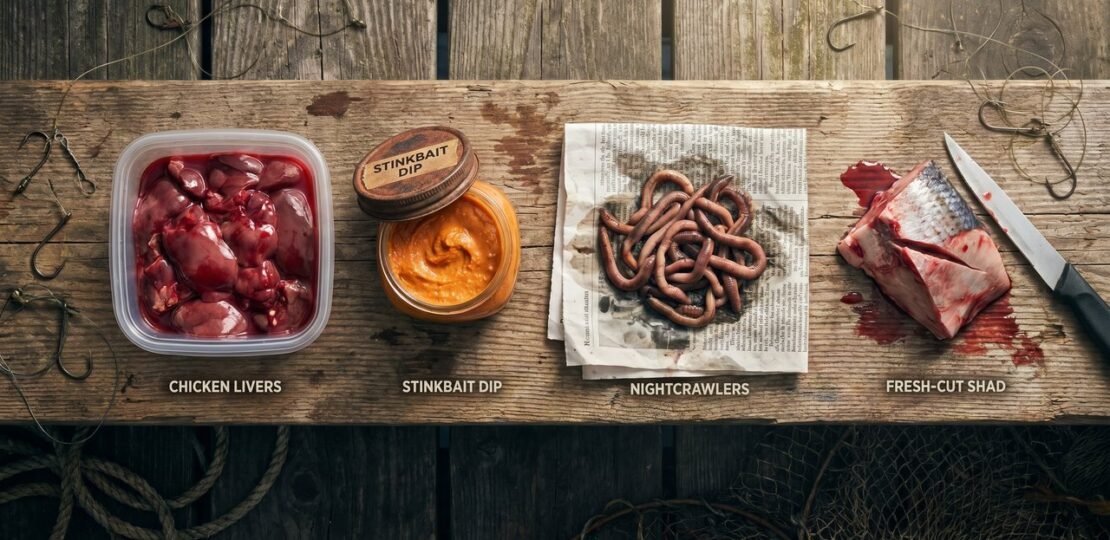
The best catfish bait depends on the species you’re targeting. For channel catfish, chicken liver and stinkbaits are unmatched. Flathead catfish want live bait, especially bluegill. Blue catfish respond best to fresh cut shad. Nightcrawlers work across all three species, making them the safest pick if you don’t know what’s biting.
Why the Species You’re Targeting Changes Everything
Most catfish bait articles lump all three species together and hand you a generic top-ten list. That’s how you waste a Saturday. The three main North American catfish species feed in fundamentally different ways, and the bait that lights up one will get ignored by another.
Channel catfish are opportunistic scavengers. If something smells strong and looks edible, they’re interested. Blood, rot, garlic, cheese, anise, chicken guts, dead minnows. Channel cats follow their nose to whatever is leaking scent into the current, which is why pungent baits dominate this category. They’re the most widely distributed catfish species in North America, and they’ll eat just about anything you put in front of them.
Flathead catfish are a different animal entirely. They’re ambush predators that hunt live prey, usually at night, and they want their meals fighting back. A dead bluegill on the bottom is invisible to a flathead. A live one thrashing on a circle hook is dinner. If you bring stinkbait to a flathead spot, you’re going home empty.
Blue catfish sit between the two. They prefer fresh fish to scavenged junk, but they don’t insist on live bait the way flatheads do. A chunk of shad cut twenty minutes ago, bleeding into the current, is exactly what blue cats want. They’re the largest catfish species in North American freshwater, with confirmed fish over 100 pounds, and they got that big eating fresh meat.
Best Bait for Channel Catfish
Channel cats are the most catchable catfish species in the United States. They live almost everywhere, they hit during daylight, and they’ll eat baits a flathead would scoff at. If you’re starting out or you just want bent rods on a summer evening, target channels first.
Chicken Liver
Chicken liver is the number-one channel cat bait, full stop. The reason is simple chemistry: it leaks blood into the water, releases iron and amino acids, and creates a scent trail a channel cat can follow from twenty yards out. You can buy it for a few dollars at any grocery store, and it works in muddy water where visual baits fail.
The problem with chicken liver is it falls off the hook. Cast hard and it’s gone. The fix is the pantyhose trick: cut a strip of old pantyhose, wrap a chunk of liver inside, tie it off, and run your hook through the mesh. The liver stays put, the scent still bleeds through. Alternatively, cure your liver in salt or a commercial bait cure for 24 hours in the fridge. It firms up and stays on a 4/0 octopus hook through repeated casts.
Stinkbait and Dip Baits
Commercial stinkbaits are a category unto themselves. Magic Bait, Sonny’s Super Sticky, and Team Catfish Double Whammy are the three names you’ll see at every bait shop, and they earn their reputations. These are paste-style baits, some thick and some runny, all of them smelling like something died in a dumpster. Channel cats love them.
You don’t use stinkbait on a regular hook. You use a treble hook tube rig: a small plastic tube or sponge slid up the line, a treble hook tied below, and the tube packed with bait so it surrounds the hook points. Dip the whole thing in your jar, sling it out, and let the scent do the work. We suggest keeping a wet rag in your tackle box because this stuff gets on everything.
Nightcrawlers
Nightcrawlers are the most underrated catfish bait in America. They work for channels year-round, they’re cheap, they don’t smell up your truck, and a kid can rig them. Thread two or three big nightcrawlers onto a 2/0 hook and you’ve got a meal a channel cat won’t refuse. They work especially well in spring when the water is cold and stinkbaits get sluggish.
Nightcrawlers also pull double duty: they’ll catch bullheads, white bass, drum, smallmouth, and whatever else swims past. Good beginner bait for that reason. If you’re not picky about species, a tub of crawlers from any gas station bait fridge will give you a full day of action.
Cut Shad
Fresh-cut freshwater shad is a sleeper bait for channel cats. Most anglers associate cut shad with blue catfish, and it does dominate that category, but channels eat it eagerly when chicken liver isn’t producing. Cut a gizzard shad or threadfin shad into one-inch chunks, hook it through once, and fish it on the bottom with a slip sinker rig.
The trick is freshness. Day-old shad in a ziplock will catch fish. Frozen shad from last season won’t. If you can cast-net your own shad on the way to your spot, you’re set.
Best Bait for Flathead Catfish
Flatheads won’t eat dead bait. They’re hunters, not scavengers, and the sooner you accept this, the more flatheads you’ll catch. Big flathead anglers don’t carry chicken liver. They carry bait tanks.
Live Bluegill
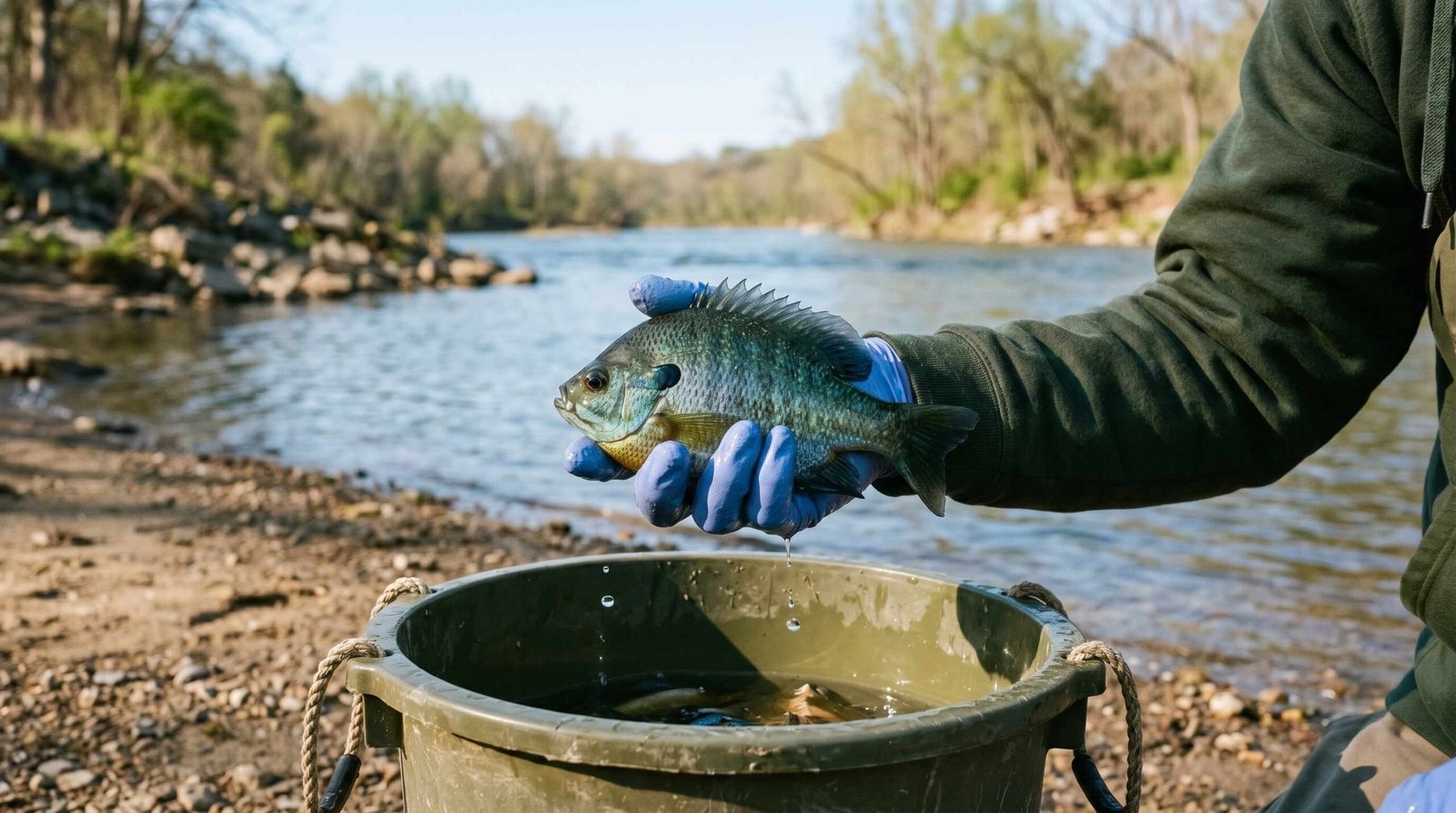
Live bluegill is the gold standard for flathead catfish. A 4-to-6-inch bluegill, hooked through the back just behind the dorsal fin with a 7/0 circle hook, suspended a foot or two off the bottom, is the textbook flathead presentation. The bluegill swims, tugs, panics, and a flathead waiting in a logjam comes out to crush it.
Check your local regulations first. Some states require bluegills used as bait to be caught from the same water you’re fishing. Most allow them, but you’ll need to catch your own or buy them from a licensed dealer. Keep them in an aerated bait tank, fish them lively, and don’t bother with one that’s been floating for an hour.
Live Perch, Shad, or Suckers
When bluegill aren’t available, live yellow perch (where legal), large shiners, gizzard shad, or white suckers all work. Suckers are particularly good for trophy-class flatheads in northern rivers. A 6-to-8-inch sucker on a 8/0 circle hook is big-fish bait, and it’ll sit through small fish until something serious comes along.
The key principle stays the same: flatheads want something alive and struggling. Dead bait rarely works for big flatheads, no matter how fresh. If your bait stops moving, replace it. A flathead’s strike trigger is movement and vibration, not scent.
Best Bait for Blue Catfish
Blue catfish are the biggest catfish species in North America, with documented fish over 100 pounds and plenty of 50-pound fish caught every year. They respond to fresh fish, current, and patience. They don’t fall for stinkbait the way channels do, and they don’t insist on live prey the way flatheads do. They want bleeding meat.
Cut Shad
Cut shad is the single best blue cat bait in most waters. Period. Gizzard shad or threadfin shad, cut into one-to-three-inch chunks depending on the size of fish you’re after, hooked once through the meat or the bony plate behind the head. The key word is fresh. Shad caught that morning, kept on ice, cut just before casting, will outfish frozen shad ten to one.
Why does freshness matter so much? Blue cats key on oil, blood, and amino acids that leach out of recently-killed fish. Once shad freezes, the cell walls rupture, the oils oxidize, and most of that scent profile is lost. Fresh-cut shad bleeds. Frozen shad just sits there. We suggest carrying a cast net and pulling your own bait on the way to the boat ramp.
Skipjack Herring
Skipjack herring is the big-blue specialist bait in large river systems. The Mississippi, Ohio, Tennessee, and Cumberland river systems all hold trophy blues, and anglers chasing 80-pound fish almost universally fish skipjack. Skipjack are oilier than shad, with stronger scent dispersion in current, and they hold up better on the hook through long soaks.
You can’t usually buy skipjack at a bait shop. You catch them on tiny jigs or sabiki rigs below dams and in tailrace areas, then ice them down. Cut them into chunks or fish them whole on a 10/0 circle hook for the biggest fish. This is purist big-blue gear.
Sucker and Carp Chunks
For big bodies of water without a steady shad population, sucker and carp chunks are excellent budget alternatives. Common carp are abundant, easy to catch on dough bait or corn, and their oily flesh makes great cut bait. Suckers, particularly white suckers and redhorse, work the same way. Cut into chunks, hook once, fish on the bottom.
This is also the bait of choice in cold water. When blue cats slow down in winter, a chunk of carp sitting on a deep hole will outfish lighter, faster-decaying baits.
Seasonal Catfish Bait Guide
Catfish behavior shifts by season, and so should your bait. Spring spawn fish behave nothing like summer feeders, and winter cats barely move at all. Match the season and you’ll fish the right water with the right bait at the right time.
| Season | Water Temp | Best Bait | Where to Fish |
|---|---|---|---|
| Spring (March-May) | 50-65°F | Stinkbait, nightcrawlers, cut shad | Shallow spawning flats, creek mouths, mud banks |
| Summer (June-August) | 70-85°F | Chicken liver, fresh cut shad, live bluegill | Channel ledges, structure near current, deep holes at night |
| Fall (September-November) | 55-70°F | Live bait for flatheads, cut bait for blues | Main river channels, deep timber, transitional flats |
| Winter (December-February) | Below 50°F | Cut shad, nightcrawlers, small live bait | Deep holes, dam tailraces, wintering pools |
Spring is transitional. Start with stinkbait in shallow water as soon as ice goes out. Nightcrawlers shine in the cold pre-spawn weeks. Cats move toward spawning flats in late spring and feed aggressively. This is the season to scout new water.
Summer is peak catfish season. All baits work, but you’ll want to fish dawn, dusk, and overnight to beat the heat. Big blues hammer fresh cut shad in current. Channel cats stack up on chicken liver near structure. Flatheads patrol logjams at night for live bluegill.
Fall is the second peak. Cats feed hard to load up before winter, and the bites get heavier. Live bait fishing for flatheads stays strong through October. Blue cats migrate to main river channels and crush cut shad.
Winter slows everything down. Cats move to deep holes and barely feed, but they still eat. Downsize your presentations, fish smaller cut bait or single nightcrawlers, and target the deepest water you can find. Bites are subtle. Set the hook anyway.
Best Catfish Bait Comparison Table
| Bait | Best For | Season | Effort Level | Tips |
|---|---|---|---|---|
| Chicken liver | Channel cats | Spring-fall | Low | Use pantyhose or cure to keep on hook |
| Stinkbait (Sonny’s, Magic Bait) | Channel cats | Summer | Low | Fish on treble hook tube rig |
| Nightcrawlers | All species, beginners | Year-round | Low | Thread 2-3 worms on a 2/0 hook |
| Cut shad | Blue cats, channels | Year-round | Medium | Fresher is better; catch with cast net |
| Skipjack herring | Trophy blue cats | Year-round | High | Catch fresh below dams, oily and durable |
| Live bluegill | Flatheads | Summer-fall | High | 4-6 inches, hook behind dorsal fin |
| Live perch/sucker | Flatheads | Summer-fall | High | Check local regulations first |
| Dough bait | Channel cats, bullheads | Summer | Low | Good for kids and panfish bycatch |
Basic Rigging for Catfish Bait
The bait does most of the work, but your rig determines whether the fish actually finds it. Two rigs cover ninety percent of catfish situations.
The Carolina rig is the most versatile catfish rig for bank and boat fishing. Slide an egg sinker (1/2 to 2 ounces depending on current) onto your main line, add a small bead, tie on a barrel swivel, then run an 18-to-24-inch leader to your hook. The sinker stays on bottom, the bait drifts naturally above it, and a fish can pick it up without feeling weight. Works for cut bait, chicken liver, and nightcrawlers.
The slip sinker rig is similar but simpler, and it’s the go-to for still fishing from the bank. Same egg sinker setup, but you tie the hook directly to the main line below the swivel. Less terminal tackle to lose, faster to retie, and just as effective for channel cats sitting in muddy water.
Hook size matters more than people think. For most live and cut bait, 5/0 to 7/0 circle hooks are the right call. Circles set themselves when the fish runs, and they almost always hook in the corner of the mouth for safer releases. For dip bait, use a treble hook in size 4 or 6 inside your bait tube. For nightcrawlers and chicken liver, a 2/0 to 4/0 octopus hook works well.
Your rod and reel matters too. Heavy braid, a strong rod, and a reel with a smooth drag keep big fish out of structure. We have full breakdowns on a proper catfish rod and reel setup, the best catfish combo options for different budgets, and our top picks for the best catfishing combo for trophy fish. For broader fundamentals, Take Me Fishing has a solid overview of catfish fishing techniques that pairs well with the bait info above.
Frequently Asked Questions
What is the best catfish bait for beginners?
Nightcrawlers are the best catfish bait for beginners. They’re cheap, easy to handle, work for all three catfish species, and don’t smell up your gear. Thread two or three onto a 2/0 hook, fish a slip sinker rig in any creek, pond, or river, and you’ll catch fish. Chicken liver is the next step up once you’re comfortable handling messier baits.
What is the best store-bought catfish bait?
Team Catfish Double Whammy and Sonny’s Super Sticky are the two store-bought stinkbaits we suggest most often. Magic Bait Catfish Bait Chunks are also widely available and effective for channel cats. All three are designed for treble hook tube rigs and produce strong scent trails in stained water.
Does chicken liver work for all catfish species?
Chicken liver works best for channel catfish. It will occasionally catch small blue cats and bullheads, but flathead catfish almost never eat it because they prefer live prey. If you’re targeting flatheads specifically, skip the liver and bring live bluegill.
What is the best catfish bait to use from the bank?
Chicken liver or stinkbait on a slip sinker rig is the best bank-fishing setup for channel catfish. For blue cats from the bank, fresh-cut shad on a Carolina rig works well, especially near deep holes or current breaks. Bank fishing favors stinky, scent-heavy baits because you can’t move to find fish, so let the fish find you.
How do you keep chicken liver on the hook?
Wrap chunks of chicken liver in a square of old pantyhose, tie it off with thread or a small zip tie, and run your hook through the mesh. The pantyhose holds the liver during the cast and lets the scent bleed through. Alternatively, cure raw liver in salt for 24 hours in the fridge to firm it up.
Can you use dead shad for flathead catfish?
Dead shad rarely works for flathead catfish. Flatheads are ambush predators that key on movement and vibration, not scent. If you only have dead shad, target blue cats or channel cats instead. For flatheads, you need live bait, ideally a 4-to-6-inch bluegill or sucker hooked behind the dorsal fin and kept lively.
What time of year is catfish bait most effective?
Summer is when catfish bait is most effective across the board. Water temperatures between 70 and 85°F push catfish into peak feeding mode, and almost any quality bait will produce. June through August is prime time for channel catfish on chicken liver, blue catfish on fresh cut shad, and flatheads on live bluegill. Fall runs a close second.